
Wewe Gombel
Not all horror stories need to involve abandoned houses, mysterious footsteps and spooky figures lurking behind windows. There are often very spooky stories told from legends.
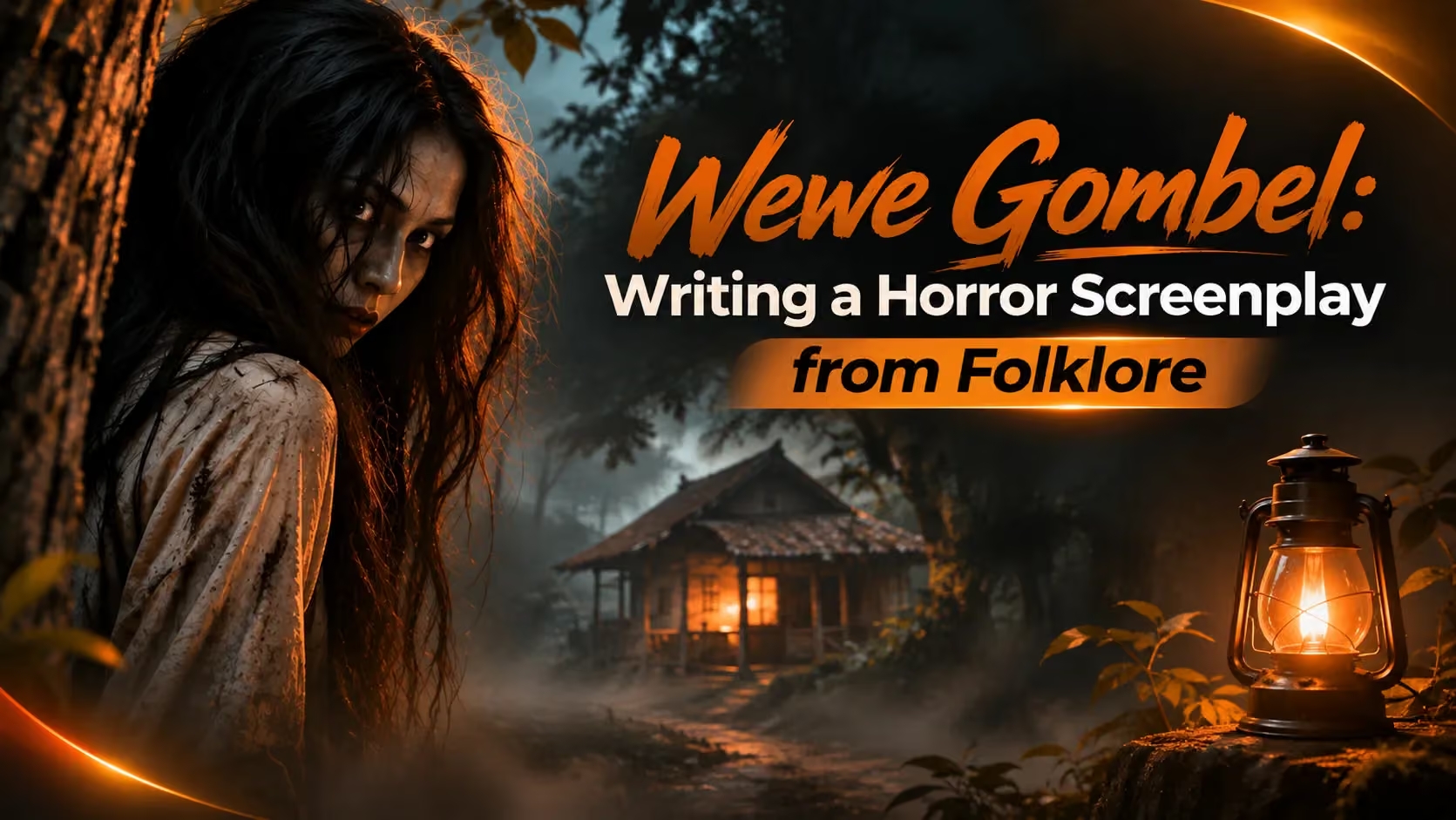
One popular supernatural figure in Javanese folklore is the Wewe Gombel. This is often connected to children going missing, peaceful villages and traditional beliefs about the supernatural.
There are many interesting aspects to this story including cultural and societal themes.
This can give storytellers an opportunity to create a horror movie using local folklore. However, how can we take a traditional story and create an exciting screenplay?
"Cerita rakyat bukan sekadar kisah masa lalu, tetapi juga cerminan nilai, kepercayaan, dan identitas budaya masyarakat."
Let’s find out!
Understanding the Wewe Gombel legend in Javanese folklore
The Wewe Gombel is a supernatural female figure in Javanese mythology. She is known from many versions of traditional stories as a spooky spirit connected to children going missing.
The legend has been passed down through generations using oral storytelling. Traditionally, it was used to teach children not to wander alone at night.
The Wewe Gombel legend is connected to the supernatural but also teaches children about safety, discipline and family. It has also been used in traditional performances such as the Javanese Barongan. (Sonobudoyo Museum, Yogyakarta.)
"Legenda Wewe Gombel mengingatkan kita bahwa cerita mistis sering kali menyimpan pesan sosial dan nilai kehidupan yang diwariskan secara turun-temurun."
We should not just look at this story as a ghost kidnapping children but also think about how local communities use traditional stories to convey messages.
Depending on the region and family there may be different versions. We should identify which parts are commonly accepted and which are a specific interpretation.

Why is the Wewe Gombel interesting to adapt into a horror movie?
Using folklore as a base can really help with creating a horror movie. As the audience may know about the legend, they will have some expectations.
There are many reasons why this story can be creatively adapted.
A. Unique Culture
It has a unique culture connected to it. This can be shown through the village setting, traditional houses, large trees and nighttime setting. This can create a very different feeling to stories purely about haunted houses.
B. Emotional Conflict
As the child goes missing there is an immediate emotional conflict. Everyone involved will feel worried.
The fear, uncertainty, loneliness and searching for a loved one can create an exciting horror story.
The relationships between families can be explored without being too simplistic or blaming parents.
C. Psychological Horror
Not all scenes need to involve the supernatural.
Sounds such as footsteps behind a tree, a swing moving without anyone touching it or a child calling can create tension.
The mystery around the missing child can be the main source of tension.
D. Modern Adaptation
This can be adapted into short films, microdramas, horror animations or AI assisted movies.
Modern adaptations should still have a meaningful connection to the folklore.
How can we create a horror movie screenplay based on the Wewe Gombel story?
When adapting folklore we can add new characters, settings and conflicts. However, we should still stay true to the culture of the legend.
Below are 5 useful steps:
Step 1: Who is the story from?
Firstly, decide who the story will follow.
This could be:
- A child hearing mysterious voices near her house.
- A mother searching for her missing child.
- A villager knowing the secret behind the old tree.
- A teenager coming back to their hometown and finding out about the spooky family legend.
Having one main character will make your short film clear and emotional.
Step 2: Create a setting
Creating a setting can help create a horror feeling.
Imagine a Javanese village with narrow roads, dim lights, large trees, sounds of insects at night and houses slowly shutting their doors.
Create a setting that fits the story. Not all Javanese villages will be the same.
Step 3: Create a conflict
Every screenplay needs a clear conflict.
The conflict could start with a child going missing after playing outside at sunset. Family members and villagers search for the child.
They begin to find clues that are hard to explain.
The story becomes more exciting if the audience know more than the main characters.
Step 4: Build up tension
Do not introduce the Wewe Gombel straight away.
Add hints:
- Footsteps near the large tree.
- A door opening.
- A child calling.
- An item from the character.
- A mysterious shadow of a female.
- Building up the tension can create curiosity.
Step 5: Create a meaningful ending.
Not every story needs to have the supernatural defeated.
You can create an emotional ending or leave the audience with a mystery.
The child could be found but the family now have a new understanding of the village legend. The moral should come through the actions of the characters.
Example – Horror screenplay (60-90 seconds) inspired by the Wewe Gombel
Below is an original screenplay inspired by the Wewe Gombel. This is a creative adaptation and not an authentic or traditional version.
- Title: The Voice Under the Old Tree
- Genre: Horror, Mystery, Folklore
- Length: 60-90 seconds
- Setting: A village in Java, Indonesia. Dusk.
- Characters:
- Rani: A nine year old girl.
- Mother: Rani’s mother searching for her.
- Wewe Gombel: A mysterious female with long hair.
Scene 1: Dusk in the village (0-15 seconds)
The sky begins to get darker. Rani is playing alone near a large tree at the edge of the village. The distant sound of the evening prayer can be heard.
Mother (from a distance):
"Rani! Come home. It's getting dark!"
Rani turns around but cannot see her mother.
Suddenly a woman’s whisper can be heard.
Mysterious Voice:
"Do you not want to play for longer?"
Scene 2: The shadow (15-40 seconds)
Rani walks slowly towards the tree. A mysterious female with long hair appears between the roots and leaves.
Rani:
"Mum?"
The mysterious female does not respond. She just holds out her hand.
The camera zooms in on Rani’s scared face. A branch snaps behind her.
The street lights flicker and the screen goes black.
Scene 3: Searching (40-65 seconds)
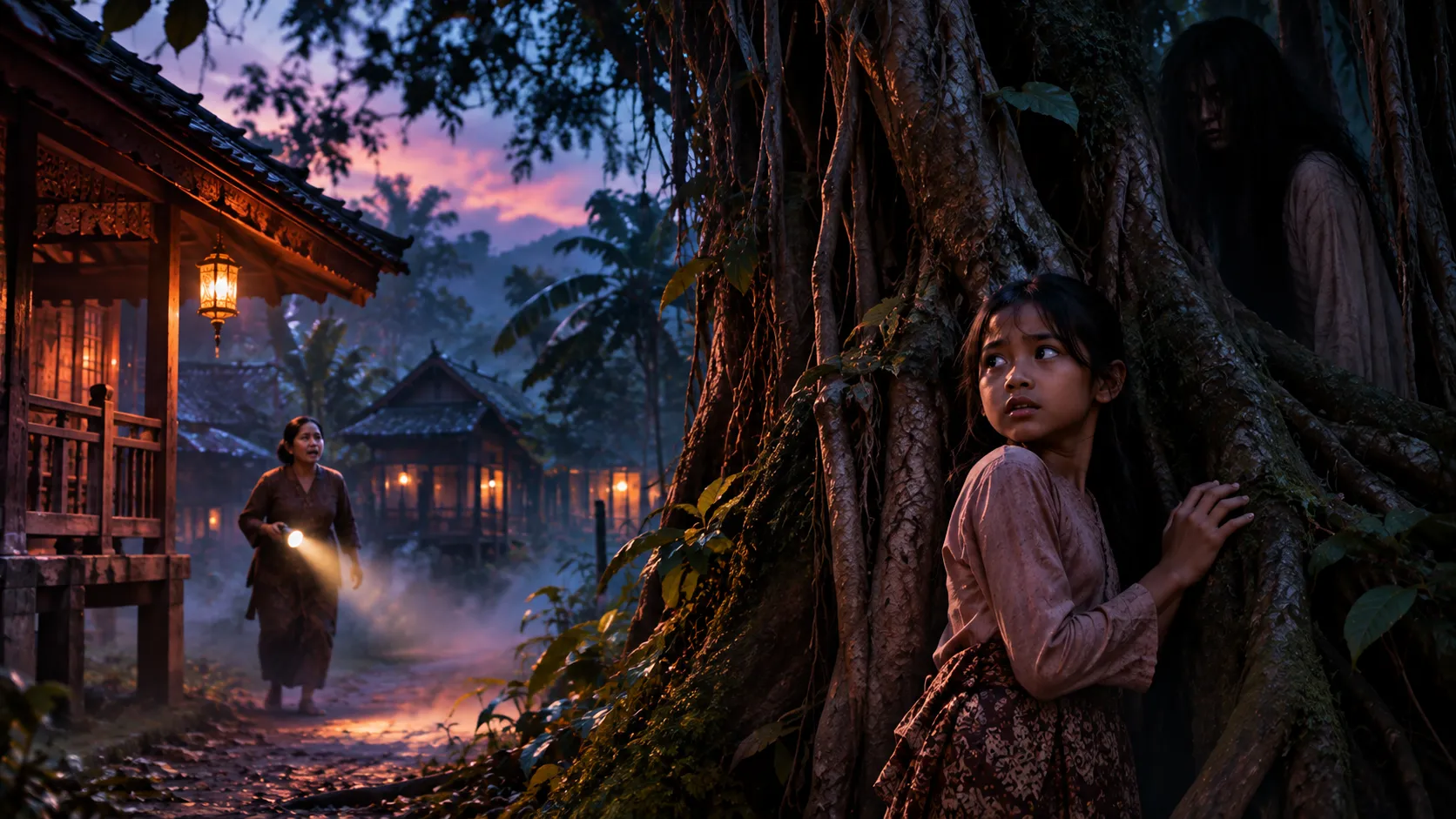
Rani’s mother runs through the village with a few villagers holding flashlights.
"Mum! Where are you sweetheart?"
Suddenly a child’s voice can be heard from the old tree.
Rani:
"Mum... I’m here!"
Rani’s mother runs towards the voice. She finds Rani sat under the tree on her own. Behind them the camera shows a tall woman’s shadow slowly fading into the trees.
Scene 4: Mysterious ending (65-90 seconds)
Rani’s mother gives her a big hug and takes her home. As they walk away the camera shows the old tree.
A woman’s voice can be heard whispering.
Mysterious Voice:
"We will play tomorrow."
Final Scene: A pale hand slowly appears from behind the trunk of the tree.
Black screen.
Text:
"Some stories never really end."
Moral Message
This story shows how important communication, paying attention and keeping children safe is. The horror comes from the mystery and tension. It does not blame parents for the difficulties.
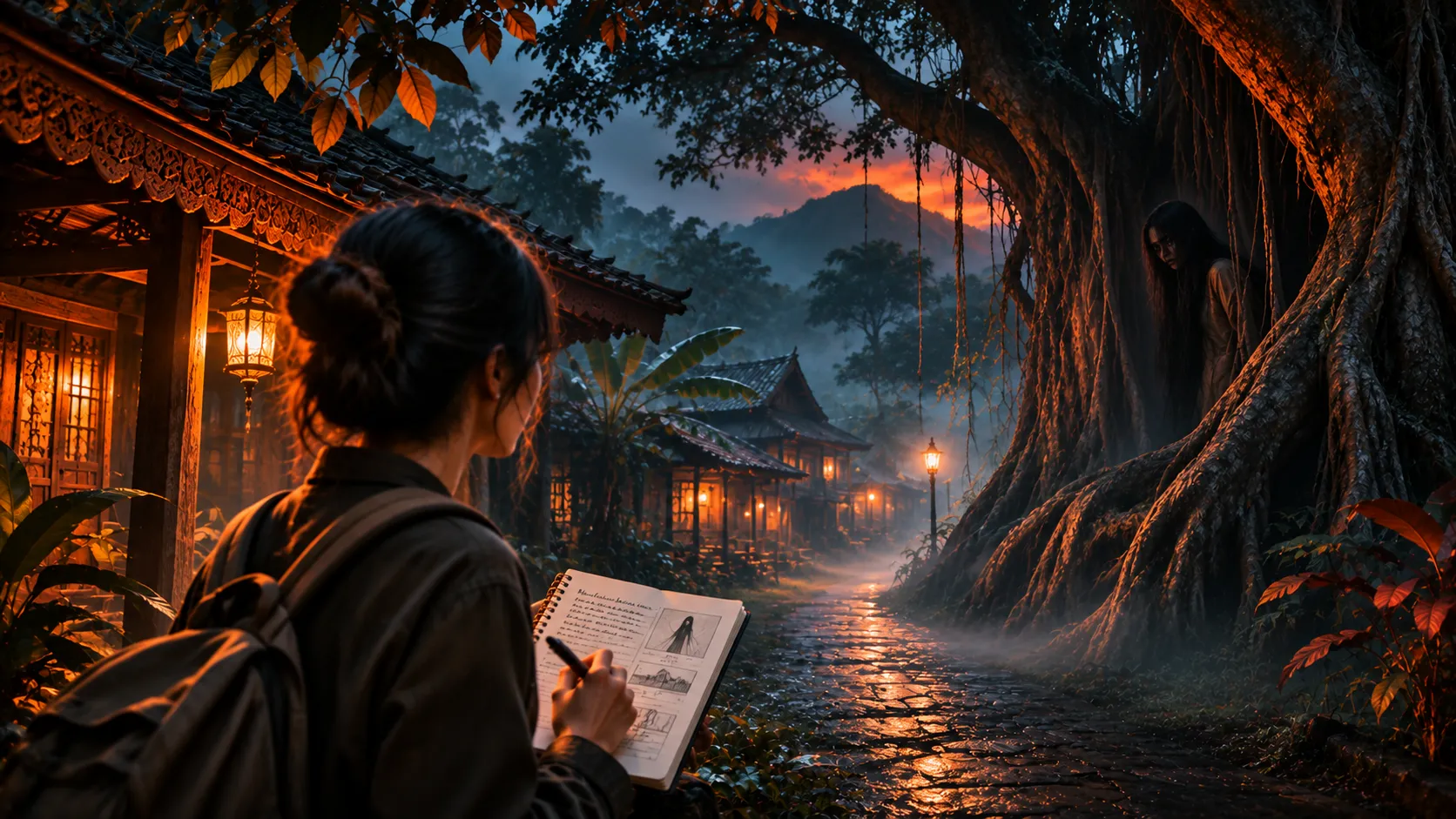
How can we make our folklore more exciting?
Once we have created our screenplay we can start to create our scenes.
We must ensure our characters are consistent, our settings are correct, lighting is right, atmosphere is created and the story flows.
Below are 4 tips:
- Character references
Ensure each character has a description. Rani can wear simple clothes to match the village. Wewe Gombel can have a consistent look.
2. Order of scenes
Split your story into sections. The beginning can have a sunset setting whilst the climax can have a shadowy and dark setting.
3. Add sound
Adding sounds such as wind, rustling leaves, footsteps and whispers can create a more horror atmosphere. You should also add background music to create the right emotions for each scene.
4. Keep consistent
Ensure your characters, clothes, settings and key items are consistent. This becomes important if you are using generative AI.
5. Using AI to help create screenplays and characters
AI can help creators turn their ideas into more structured ideas.
For example, an idea about a child meeting a mysterious figure near an old tree can be turned into a screenplay, character descriptions and scenes. One tool you can use is Xelta AI Script & Character. This helps creators turn prompts into editable screenplays, character lists and scene breakdowns. You can also create character reference images.
For the Wewe Gombel story you can start with a prompt about the Javanese setting, conflict, characters, length and horror atmosphere. However, you should always check the AI output and edit it. The culture, dialogue, characters and moral should all be checked by humans to ensure they are portrayed accurately. AI should be used as a creative tool.
Key points to consider when adapting Javanese folklore
Folklore is part of culture so should be handled responsibly. When adapting the Wewe Gombel legend consider:
- Don’t change the meaning of the culture. Ensure you understand the background and purpose of the legend before adding new conflicts.
- Don’t blame the parents. The story should not be too simplistic about the struggles parents face.
- Clearly state any added culture. If you are adding new characters, settings or events then make it clear it is a creative adaptation.
- Don’t assume one version is the true one. Folklore is passed down through oral storytelling so there may be different versions depending on the region. Don’t assume one version is the true one.
Ask for feedback from local communities. If your production involves specific culture then ask local storytellers, traditional artists or cultural researchers for feedback.
This can help you create exciting horror stories whilst respecting the culture.
Final Thought
The Wewe Gombel legend shows how traditional folklore can be a great source of inspiration for modern horror movies. As it involves a mysterious female and children going missing there are opportunities to create tension, emotional conflict and culture.
However, to create a successful adaptation you must understand the culture, create characters with clear motives and deliver the moral message responsibly.
"Mengangkat cerita rakyat ke dalam film modern adalah salah satu cara untuk menjaga warisan budaya tetap hidup dan dikenal oleh generasi berikutnya."
By researching the folklore, creating a structured screenplay and using creative tools you can bring local legends such as Wewe Gombel to new audiences.