



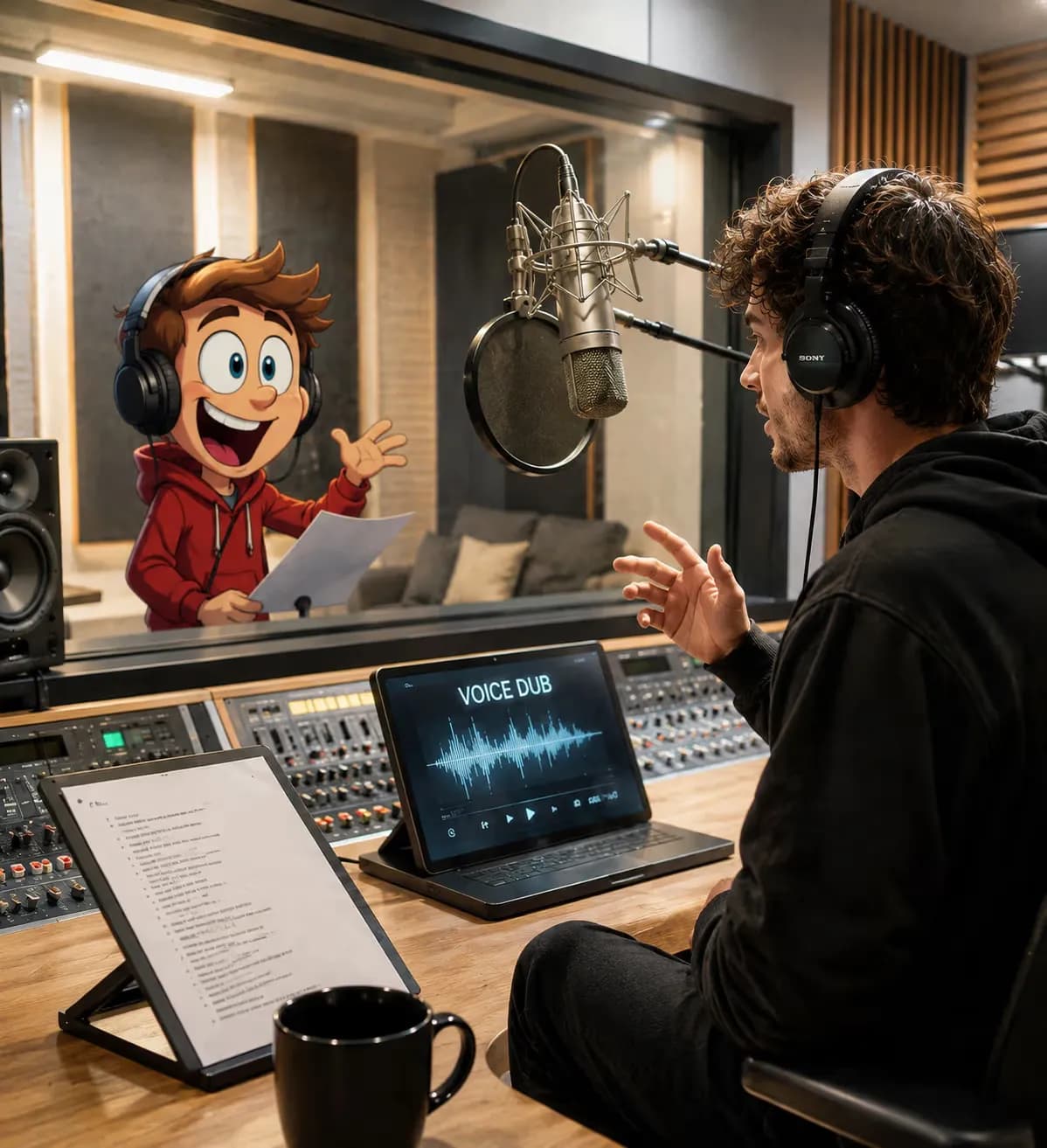




Dubbing Quality Is a Translation System, Not a Voice Sample
A convincing voice can still deliver the wrong message. For ai video dubbing, AI Video Creation workflows on Xelta are most useful when the team defines the source-language master, destination, and approval rules before generating scenes. The gap between an idea and a usable asset is usually a review problem, not a typing problem.
For localization managers, marketing teams, educators, agencies, and global content operations leads, the practical task is to turn an approved source video, clean dialogue track, transcript, target-language script, pronunciation guide, subtitle file, consent records, and market-specific review notes into a localized master and market variants with aligned speech, readable captions, controlled terminology, and documented approvals. The article uses the Meaning-Voice-Timing-Market Review Model to focus on meaning accuracy, voice fit, timing, pronunciation, lip alignment, caption consistency, market review, and update control. The Meaning-Voice-Timing-Market Review Model does not assume that generation clears rights, proves a claim, or removes the need for editing. Its main risk is that a natural voice may hide mistranslation, changed claims, poor pronunciation, caption conflicts, or consent gaps.
The Direct Answer for Teams Comparing Dubbing Workflows
Lock the source transcript, protect terminology, adapt the script for spoken meaning, test difficult lines, and review the complete localized sequence with bilingual market reviewers. Useful dubbing preserves claims, speaker intent, timing, captions, and version control instead of merely replacing the audio track. A ai video dubbing is useful when its drafts preserve the source-language master, respond to targeted revision, and can be approved for one named destination.
Questions Buyers Should Ask Before the First Language Test
Write the downstream decision at the top of the brief. The real question is how to judge dubbing quality beyond a natural-sounding sample and choose a workflow that remains accurate across complete videos. Name the audience, final placement, allowed interpretation, protected facts, and reviewer. Then decide which parts of the source-language master should be retained, shortened, rebuilt, or omitted. For ai video dubbing, this decision prevents a tool comparison from becoming a collection of attractive samples.
The Meaning-Voice-Timing-Market Review Model
The Meaning-Voice-Timing-Market Review Model uses five connected records. Source Control defines the approved source-language master and protected details. The editorial map states the viewer question, message, and omissions. The generation plan translates the source-language master plan into scenes, prompts, references, audio, and edit points. The assembly review tests the localized videos that preserve meaning, speaker identity, timing, captions, and brand intent across markets as a sequence. The release record identifies the approved ai video dubbing version, destination, limitations, and owner. The Meaning-Voice-Timing-Market Review Model records stop a source-language master problem from being repaired in the wrong place. A source error should not be hidden with a new visual for localized videos that preserve meaning, speaker identity, timing, captions, and brand intent across markets.

Lock the Source Transcript and Protected Terms
Transcribe the approved source exactly, mark product names, interface labels, legal wording, numbers, speaker names, and phrases that must not change. Separate spoken errors from intentional delivery. The target script cannot be reviewed properly when the source meaning is uncertain or protected terminology is hidden. Input: The final source video, transcript, product glossary, and compliance notes. Output: A time-coded source script with protected terms and named owners. Review: Confirm every line against the approved video and resolve unclear speech before translation. Next: Create the target-language adaptation brief.
Adapt the Script for Spoken Meaning
Translate for spoken comprehension rather than matching words mechanically. Record approved changes needed for sentence order, idioms, politeness, pacing, and market context. Natural delivery often requires adaptation, but undocumented adaptation can change claims or remove important context. Input: The locked source script, glossary, target audience, and market guidance. Output: A target-language script with source references and pronunciation notes. Review: Use a bilingual reviewer to check meaning, terminology, tone, and omissions. Next: Prepare a short voice and timing test.
Generate a Controlled Voice and Timing Test
Test representative lines containing names, numbers, fast phrases, pauses, emotional changes, and difficult mouth movement. Keep the same script and settings while comparing voice options. A polished easy sentence does not reveal whether the workflow can handle the difficult parts of the real video. Input: The approved target script, clean dialogue, speaker profile, and timing markers. Output: A short comparison set with named settings and known defects. Review: Review pronunciation, speaker fit, pacing, mouth timing, noise, and emotional consistency. Next: Select a direction and generate the complete language version.
Review the Full Localized Sequence With Market Experts
Watch the full video with sound, muted captions, and normal mobile playback. Check scene timing, subtitles, on-screen text, pronunciation, CTA language, and continuity between lines. Dubbing failures often appear across transitions, repeated terms, caption breaks, or market-specific details rather than in one isolated sentence. Input: The complete localized edit, source master, glossary, and destination specifications. Output: A timestamped correction list and a signed release record for the market. Review: Require language, brand, accessibility, rights, and publishing owners to approve their own checks. Next: Archive the approved version and reuse its glossary for updates.

A Product Launch Localized for Three Markets
Consider this controlled example: a SaaS company localizing one product-launch video into Hindi, Spanish, and German while protecting interface terms, product names, and a fixed legal disclaimer. The ai video dubbing team first identifies protected facts in the source-language master and one viewer outcome. It then creates a source map, a Meaning-Voice-Timing-Market Review Model plan, and a named checklist for localized videos that preserve meaning, speaker identity, timing, captions, and brand intent across markets. Early ai video dubbing drafts are assembled before every detail is polished, so source-language master sequence problems appear while they are still inexpensive to change. This source-language master scenario is a worked example, not a performance claim.
Human Studio, Automated Dubbing, or a Hybrid Process
The ai video dubbing options below solve different production problems. Compare them using source-language master fidelity, control, review effort, editability, and destination fit. For localized videos that preserve meaning, speaker identity, timing, captions, and brand intent across markets, the strongest method preserves required information and reaches approval without hiding repair work.
Dubbing Defects That Sound Polished but Change Meaning
The most damaging failure patterns are approving a voice from one easy sentence, translating text without a protected terminology list, changing claims to make timing easier, reviewing audio without captions and on-screen text, and publishing every market version from one general approval. For ai video dubbing, these errors make the localized videos that preserve meaning, speaker identity, timing, captions, and brand intent across markets harder to verify and teach the team very little.
Release Controls for Reliable Language Versions
A stronger operating standard is to lock the source meaning before choosing a voice, use bilingual review for every target-language script, test difficult pronunciation and timing conditions, review captions, speech, and visible text as one system, and keep consent, glossary, and market approval records together.

Where Xelta Fits in a Dubbing Production Line
Xelta can enter after the team has prepared the source-language master, the production map, and the acceptance criteria. The core video generator can support initial scene creation, while the Xelta video dubbing workflow for language adaptation and review offers a more specific route for this article's workflow. The ai video dubbing user still chooses the source-language master, approves instructions, compares drafts, and finishes the localized videos that preserve meaning, speaker identity, timing, captions, and brand intent across markets edit.
The Meaning-Voice-Timing-Market Review Model advantage is that exploration and variation happen closer to the approved source-language master. That does not make every localized videos that preserve meaning, speaker identity, timing, captions, and brand intent across markets detail accurate. Product facts, speaker identity, rights, accessibility, continuity, and the final ai video dubbing placement remain human review responsibilities.
What the First Xelta Dubbing Test Should Include
A useful first session begins with an approved source video, clean dialogue track, transcript, target-language script, pronunciation guide, subtitle file, consent records, and market-specific review notes. The user turns the source-language master into one narrow ai video dubbing assignment and generates a small comparison set. The first localized videos that preserve meaning, speaker identity, timing, captions, and brand intent across markets draft is inspected for direction and source fidelity before polish. During Meaning-Voice-Timing-Market Review Model revision, accepted elements stay fixed while one important variable changes.
Xelta workflow examples can support learning for ai video dubbing, but project approval must come from the user's own source-language master and checklist. The ai video dubbing learning curve is mainly editorial: deciding what the viewer needs from the source-language master, writing visible instructions, and diagnosing defects. The final localized videos that preserve meaning, speaker identity, timing, captions, and brand intent across markets should be tied to one approved use and version.
Make Dubbing Guidance Useful for Search and Localization Teams
For search and generative retrieval, a ai video dubbing page should answer the central question early, define the source-language master input and localized videos that preserve meaning, speaker identity, timing, captions, and brand intent across markets output, and explain the Meaning-Voice-Timing-Market Review Model with task-specific headings. Keep the ai video dubbing transcript, visible article, FAQs, and structured data aligned. Label source-language master examples clearly and avoid invented search volume, performance numbers, legal conclusions, or tool capabilities. This guidance is designed for localization managers, marketing teams, educators, agencies, and global content operations leads and uses a reproducible editorial method: controlled source material, explicit transformation choices, staged review, and a documented release decision. The Meaning-Voice-Timing-Market Review Model does not guarantee ranking, citation, or commercial results.
Localize One Approved Master Before Scaling Languages
Begin with one approved source-language master, one viewer job, and one destination. Use the Meaning-Voice-Timing-Market Review Model to create a small draft set, record what changed, and approve only the version that preserves the required information. For ai video dubbing, the next practical step is to open Xelta Video Dubbing and test the topic-specific workflow with controlled source-language master material.