



Explore Five Stunning Food Plating Ideas for One Dish
A beautiful plate is useless when the kitchen cannot reproduce it during service.
Food plating ideas can be explored from one approved dish photo by creating several concept directions, comparing their visual hierarchy, and testing the best option in the real kitchen. An AI food plating generator can support early visualization, but portion, ingredients, tableware, temperature, service speed, and customer expectation must remain under human control.
This approach helps chefs, restaurant owners, cafés, hospitality teams, and food marketers evaluate restaurant plating styles before arranging a full photography day. The result should be treated as plating style inspiration, not proof that the kitchen can deliver the concept exactly.
Define What Must Stay Fixed on Every Plate
Before generating variations, create a plating lock list.
- Exact dish and portion
- Required ingredients and garnish
- Sauce quantity
- Plate or bowl size available in the restaurant
- Temperature and holding limits
- Service time
- Dining or delivery context
- Brand style and price position
The plate is part of operations, not only design. Tall garnish may collapse, wide sauce work may slow service, and oversized tableware may not fit the real operation. Test the selected direction with real food and the kitchen team.
Style One: Modern Minimal with Strong Negative Space
This style uses a restrained portion placement, one controlled sauce element, and generous empty space. It suits menus where the dish, plate quality, and visual precision support a premium impression.
Prompt direction:
Recompose the uploaded dish as a modern minimal plating concept. Preserve the exact portion and ingredients. Use the approved white plate, place the main food slightly off-centre, add one controlled sauce element using the existing sauce, and keep generous negative space. Do not add garnish, reduce the portion, or invent tableware.
It is less suitable for dishes built around abundance or shared eating.
Style Two: Rustic and Generous
Rustic plating uses natural texture, visible abundance, and relaxed arrangement. It may suit grilled dishes, bakery items, comfort food, or casual premium brands.
Keep the plate organised even when the placement looks informal. “Rustic” should not mean messy. Use existing ingredients, natural serving ware, and a believable contact shadow.
Keep the portion fixed so the visual does not add sides or enlarge the serving.
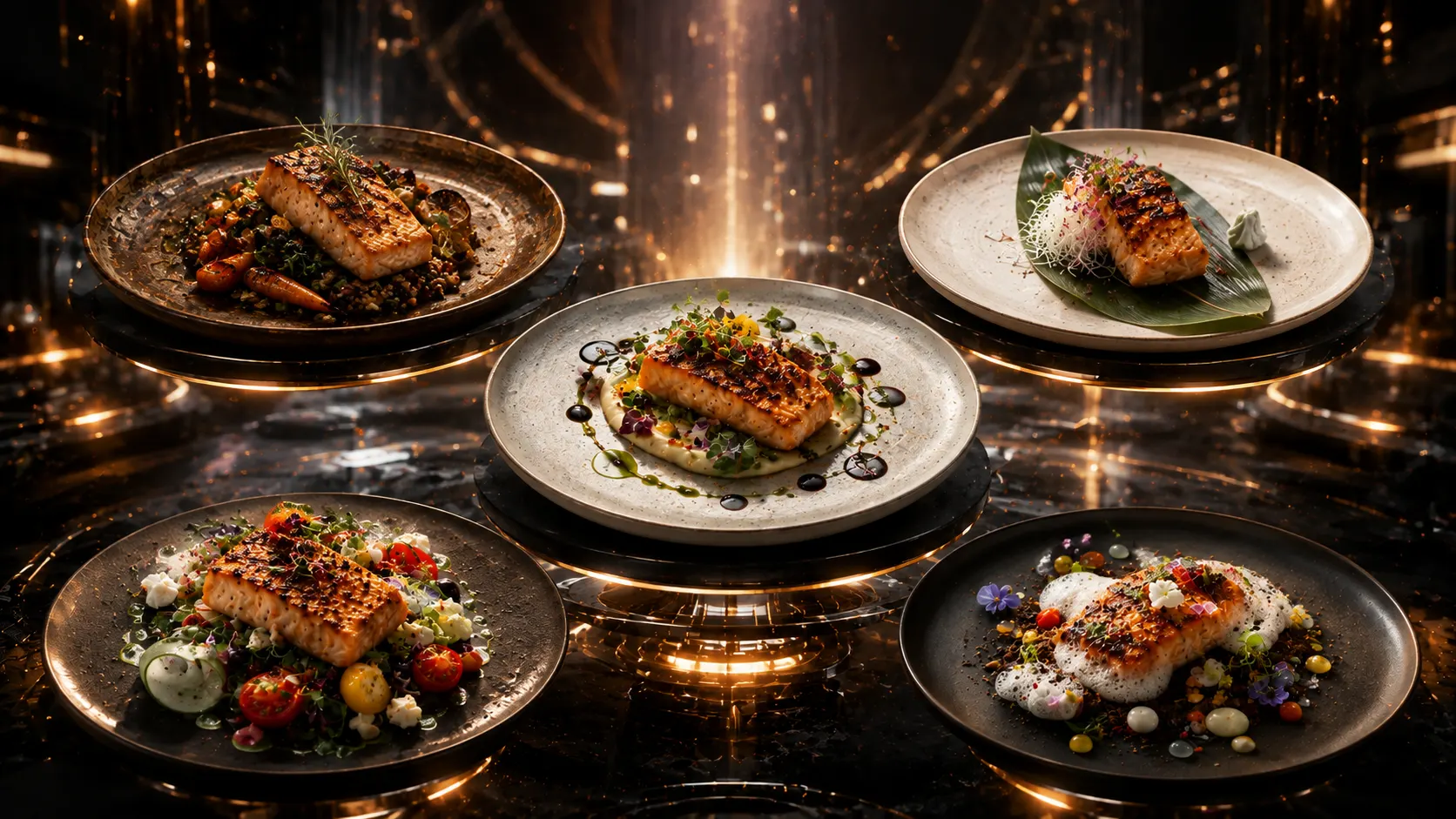
Style Three: Fine-Dining Vertical Composition
Fine dining plating ideas often use height, layering, and a strong focal point. This can create a dramatic presentation, but it requires the most operational testing.
Check:
- Can the structure remain stable from kitchen to table?
- Does the height hide important ingredients?
- Can staff plate it consistently?
- Does the garnish stay fresh?
- Can the customer eat it comfortably?
Use the concept to explore balance, then build and approve the plate physically before publishing it.
Style Four: Shared Platter with Clear Zones
A shared platter should communicate variety without looking crowded. Divide the plate into clear zones for the main food, sides, sauces, and garnish.
This style suits group dining, tasting platters, thalis, sharing starters, and celebration menus. It requires strict portion and bowl placement rules so the real service remains consistent.
Sample direction:
Create a shared-platter concept using only the uploaded dish components. Preserve the exact number of items, side dishes, bowls, and portion. Arrange them in clear balanced zones with visible separation and a central focal point. Do not add food, change bowl colours, or enlarge the platter.
Style Five: Delivery-Friendly Presentation
Delivery plating is really packaging presentation. The priority is clarity, stability, and accurate expectation rather than decorative height.
Use compartments, sealed sauce containers, stable garnish, and a top-down composition that shows the full order. The dish presentation ideas should match the package customers actually receive.
A delivery concept should be tested after transport. Sauce movement, steam, condensation, and shifting ingredients can change the appearance between the kitchen and the customer.
Compare the Five Styles Before Choosing One
Use a simple decision table:
| Style | Strongest benefit | Main risk |
|---|---|---|
| Modern minimal | Clear premium focus | Can appear too small |
| Rustic generous | Warm and approachable | Can become visually messy |
| Fine-dining vertical | Dramatic presentation | Slow or unstable service |
| Shared platter | Communicates variety | Portion and zone inconsistency |
| Delivery-friendly | Accurate ordering expectation | Less decorative freedom |
No verified Xelta screenshots or tests were supplied. A practical workflow is to upload one approved dish image, create five concept visuals with the same locked portion and ingredients, compare them, and select only the directions that the kitchen can reproduce.
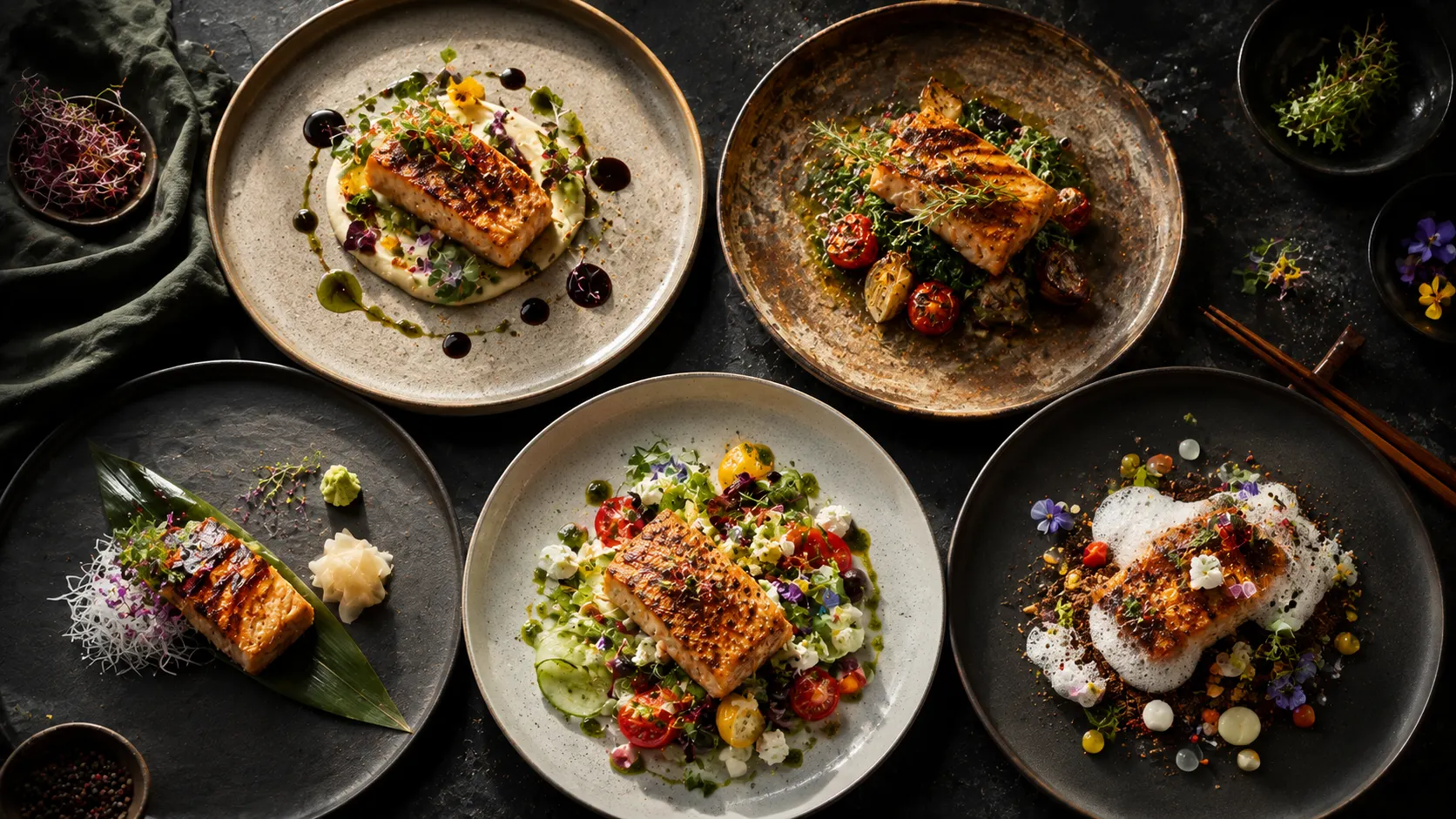
Turn the Chosen Concept into a Real Service Standard
Once a style is selected, photograph the final real plate and create a plating guide for the kitchen.
Include:
- Plate diagram or reference photo
- Portion weights or counts
- Sauce position and quantity
- Garnish type and placement
- Bowl and utensil position
- Final wipe and cleanliness check
- Maximum plating time
This is the point where plating style inspiration becomes a reliable restaurant standard. The approved real photograph should become the reference for future menus and campaigns.
Review, Publish, and Scale the Presentation
Before using any concept in marketing, confirm that the real dish matches the visual. Review ingredient claims, portion, price, tableware, garnish, and service format.
Reuse the selected system for related dishes only when the kitchen has tested them. A single plating style should not be forced onto every menu category.
Keep Concept Visualization Separate from Food Editing
This article focuses on comparing plating systems. A food photo editor guide should cover lighting, background cleanup, and image crops. A food video guide should cover motion and frame stability. Mixing these purposes would weaken the search intent.
Common mistakes include reducing portions to create negative space, adding decorative ingredients, choosing unavailable plates, ignoring service speed, and publishing generated concepts before real kitchen testing.
When a Concept Needs More Kitchen Control
Do not rely on AI concepts when allergen separation, precise nutrition, temperature, structural stability, or legal claims require specialist review. The workflow is also unsuitable when the team cannot reproduce the plate consistently during peak service.
Use AI for Options and the Kitchen for Approval
Start with one real dish, five controlled concepts, and one operational test. Use Xelta to explore the visual directions, then approve the final plate only after the kitchen can reproduce it accurately.