


Free AI Image Generator from Text: Turn Your Ideas into Visual Content
Professional imaging traditionally demanded graphic design software, photography, stock-images, or a professional designer to come up with a good idea for an image.
Using an AI generator allows you to enter a prompt and generate an image on your own. All you need to do is to describe the image, and AI understands your prompt, interpreting it and creating a whole new image depending on specifics like subject, scene, lighting, composition, camera angle, mood, and style.
For instance:
"A luxury modern villa featuring an infinity pool, glass walls, mountain landscapes, sunset light, realistic architectural photography."
The text-to-image AI generator uses this prompt to generate an entirely new image.
Such technology is helpful in:
Social media graphics Campaigns Product visuals Website banners Blog illustrations Real estate marketing
- Interior design concepts Advertising visuals Digital art Branding storytelling
Nonetheless, the best free AI image generator is not only the one that generates aesthetically appealing images. The ideal platform should guide users through:
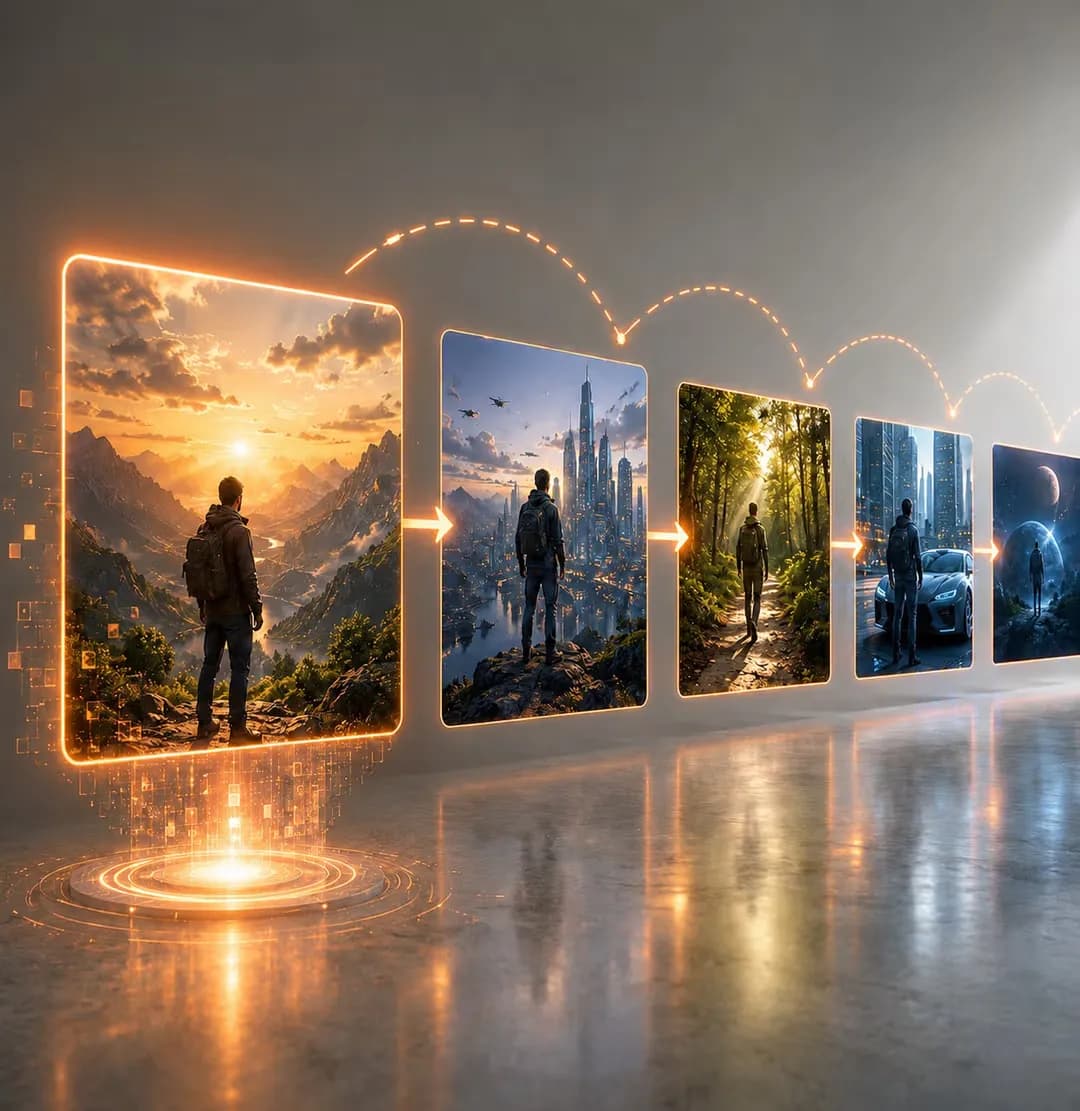
Idea → Prompt → Image → Review → Variation → Final Creative Asset
Modern AI image platforms are evolving in that way. Xelta AI combines image generation with image editing, video, design, e-commerce, social media, and marketing workflows.
What Is a Free AI Image Generator from Text?
A free AI image generator from text is an artificial intelligence tool that creates images based on written instructions.
The written instruction is called a prompt.
A prompt can describe:
Main subject Background Environment Lighting Colors Camera angle Visual style Mood Composition
Simple Example
Prompt:
“A premium coffee cup on a wooden table, warm morning sunlight, soft shadows, realistic commercial product photography.”
The AI processes this description and generates a new image based on the visual information in the prompt.
Unlike a stock-photo website, a text-to-image generator does not simply search for an existing image. It creates a new visual interpretation of the written idea.
Step 1: Decide the Purpose of the Image
Asking the following question prior to creating a prompt is recommended:
"What is required from this image?"
Such as:
Attracting attention on social media Advertising a product Introducing a blog post topic Illustrating a web page Presenting a design idea Creating a visual ad
The appealing image won’t work well if it doesn’t serve the purpose of the content.
The other important recommendation by Xelta is to determine the visual task, channel, audience and review process prior to image creation.
Step 2: Write a Structured Prompt
A strong prompt can follow this structure:
Subject + Environment + Action + Lighting + Style + Composition
Example:
“A futuristic electric car driving through a modern city at night, neon reflections on wet streets, cinematic lighting, realistic automotive photography, low-angle composition.”
This provides more direction than a short prompt such as:
“A cool futuristic car.”
Step 3: Generate the Image
The AI analyzes your prompt and creates an image based on the information provided.
Depending on the platform, users may have access to different image-generation models and creative workflows. Xelta's workspace currently lists multiple image-generation models and image-editing workflows.
Step 4: Review and Improve
The first result may not always be the final result.
Review:
Subject accuracy Composition Lighting Proportions Unwanted objects Text accuracy Brand consistency
You can then improve the prompt or generate controlled variations.
1. Text-to-Image Generation
The most important feature is the ability to convert written ideas into visuals.
Users should be able to create:
Product images Marketing banners Social media visuals Concept art Illustrations Website graphics
2. Multiple Visual Styles
Different projects require different visual styles.
Photorealistic Images
Useful for:
Product photography Real estate Fashion Commercial marketing
Digital Art
Useful for: Illustrations Creative storytelling Social media content
3D Visuals
Useful for:
Architecture Interior design Product concepts
Cinematic Visuals
Useful for:
Advertising Film concepts Brand storytelling
3. Image Editing and Enhancement
A complete AI creative workflow should not stop at image generation.
Useful capabilities can include:
Background removal Image enhancement Object replacement Style transformation Image upscaling Creative editing
Xelta's current ecosystem includes image generation and image editing alongside video, design, social, e-commerce and marketing categories.
4. Prompt Flexibility
A useful text-to-image tool should understand both simple and detailed prompts.
Beginner Prompt
“A modern living room.”
Detailed Prompt
“A contemporary minimalist living room with warm neutral tones, textured walls, premium furniture, natural daylight through large windows, indoor plants, realistic interior photography, wide-angle composition.”
The second prompt gives the AI more visual direction.
Faster Visual Content Creation
AI can help reduce the time needed to create initial visual concepts.
This is especially useful for businesses that regularly need images for:
Social media Blogs Websites Advertising Product campaigns
Lower Creative Entry Costs
Small businesses and creators may not have the budget for professional design services for every visual requirement.
Free AI image generation can make experimentation more accessible.
More Creative Experimentation
One idea can be explored in multiple directions.
For example, a luxury hotel concept can become:
Sunset travel advertisement Minimalist architecture visual Social media campaign image Cinematic brand image
More Content from One Brief
A single marketing idea can be transformed into several visual concepts for different channels.
This can support:
Social media campaigns Blog content Website banners Email marketing Digital advertising

Faster Concept Development
Designers and marketers can use AI to explore early visual ideas before investing time in detailed production.
This makes AI useful for both final content and creative brainstorming.
Prompt
“Premium wireless headphones placed on a white marble surface, soft studio lighting, realistic shadows, luxury technology product photography.”
Suitable For
Product pages Social media Advertising campaigns Promotional banners
Prompt
“A modern luxury villa with glass walls, infinity pool, landscaped garden, mountain background, warm golden-hour lighting, realistic architectural photography.”

Suitable For
Property listings Builder websites Real estate brochures Lead-generation campaigns
Prompt
“Fresh Italian pizza with melted cheese and basil leaves on a rustic wooden table, warm restaurant lighting, professional food photography, close-up composition.”
Suitable For
Restaurant social media Menu visuals Food delivery promotions
Prompt
“A modern minimalist living room with neutral colors, textured walls, premium furniture, indoor plants, natural sunlight, realistic interior photography.”
Prompt
“A modern digital workspace showing artificial intelligence, data visualization, and creative technology, clean editorial illustration, professional business style.”
Free AI Image Generator vs Traditional Design
| Factor | Free AI Image Generator | Traditional Design |
|---|---|---|
| Starting Point | Text prompt | Manual design process |
| Speed | Fast concept creation | Usually slower |
| Learning Curve | Beginner-friendly | Can require training |
| Variations | Easy to generate | More manual |
| Creative Exploration | Highly flexible | Depends on designer |
| Precision | Requires review | High manual control |
| Best For | Ideation and rapid content | Detailed production design |
Expert Perspective
Image generation through AI and the use of design are not always a substitution for one another.
AI can be used for:
Brainstorming Ideas Variations Graphics Design
Design can be chosen over AI for:
Brand-specific designs Editing at the pixel level Technical drawings Typography Production management
The most effective approach in today’s environment is a combination of both approaches..
Why Xelta AI Is Different
Xelta AI is considered to be a more inclusive AI-driven creation tool, not just a basic text-to-image converter.
The current offerings of the platform include the following:
Image generation Image editing Video generation Video editing Social media processes Creative processes E-commerce processes Marketing and advertisement processes
Currently, there are multiple image generators and creative workflows listed on the platform.
Xelta AI USP: From One Prompt to a Complete Creative Workflow
The ideal workflow will be something like the following:
Text Idea → AI Image → Variations → Editing → Video → Marketing Asset
Some examples include:
Determining the objective of the image. Writing a well-structured prompt. Generating the first image. Generating controlled variations. Editing/Enhancing the generated image. Transforming the static image into a video. Prepping the video as your final marketing asset.
These will help you consider AI to be an important part of the content generation workflow rather than simply an input box.
You can try out the Xelta AI Image Generator for generating text-to-image content and the Xelta AI Video Generator for transforming static images into videos.
What Is Your Main Use Case?
First, identify your primary need.
Do you want to create:
Social media images? Product visuals? Blog illustrations? Advertising creatives? Real estate images? Interior design concepts?
Different tools may be better suited to different use cases.
Does It Offer Editing Tools?
If you need to modify generated images, an integrated editing workflow can be more efficient than using several separate platforms.
What Does “Free” Actually Include?
Check:
Number of free generations Daily/monthly quota Resolution Watermark Available models Terms for commercial use
Free use can be helpful for testing purposes, but it is advised to take a look at the appropriate plan.
Pricing page of Xelta offers flexible pricing and an enterprise solution which includes such options as private cloud deployments, dedicated support, custom models/integrations..
Can the Tool Scale with Your Workflow?
A tool may be perfect for casual experimentation but insufficient for a growing agency or business.
Consider future requirements such as:
Higher generation volume More models Editing workflows Team collaboration Enterprise infrastructure

Start with the Image's Purpose
Do not begin with:
“Create a beautiful image.”
Instead, begin with:
“I need a website hero image that communicates premium quality to potential customers.”
The purpose should guide the visual direction.
Be Specific
Weak prompt:
“A luxury car.”
Better prompt:
“A premium black electric sports car on a mountain road during golden hour, cinematic lighting, realistic automotive photography, low-angle camera perspective.”
Describe the Lighting
Useful terms include:
Golden hour Soft daylight Studio lighting Dramatic shadows Neon lighting Warm ambient lighting
Create Controlled Variations
Change one or two elements at a time.
For example:
Variation 1: Change the background. Variation 2: Change the lighting. Variation 3: Change the camera angle.
This makes creative testing more useful.
Always Perform Human Review
Before publishing, check:
Faces Hands Product details Logo Text Reflections Proportions Brand accuracy
AI can accelerate production, but human review remains important for quality and trust.
Pillar Page
AI Image Generator
Supporting Articles
Free AI Image Generator from Text Best Free AI Image Generator AI Image Generator from Image Free AI Image Generator for Beginners How to Write Better AI Image Prompts AI Image Generator for Social Media AI Image Generator for E-commerce AI Image Generator for Real Estate AI Image Generator for Interior Design AI Image Generator vs Traditional Graphic Design