

Can You Use AI-Generated Images Commercially?
A candle brand wants to create a lifestyle image for its website. The computer generated kitchen is enticing until the copper lid turns to silver. The questions raised in using image generators commercially are: are you allowed to use the output, and does the image accurately represent what you're selling? Xelta AI supports image creation, but requires review.
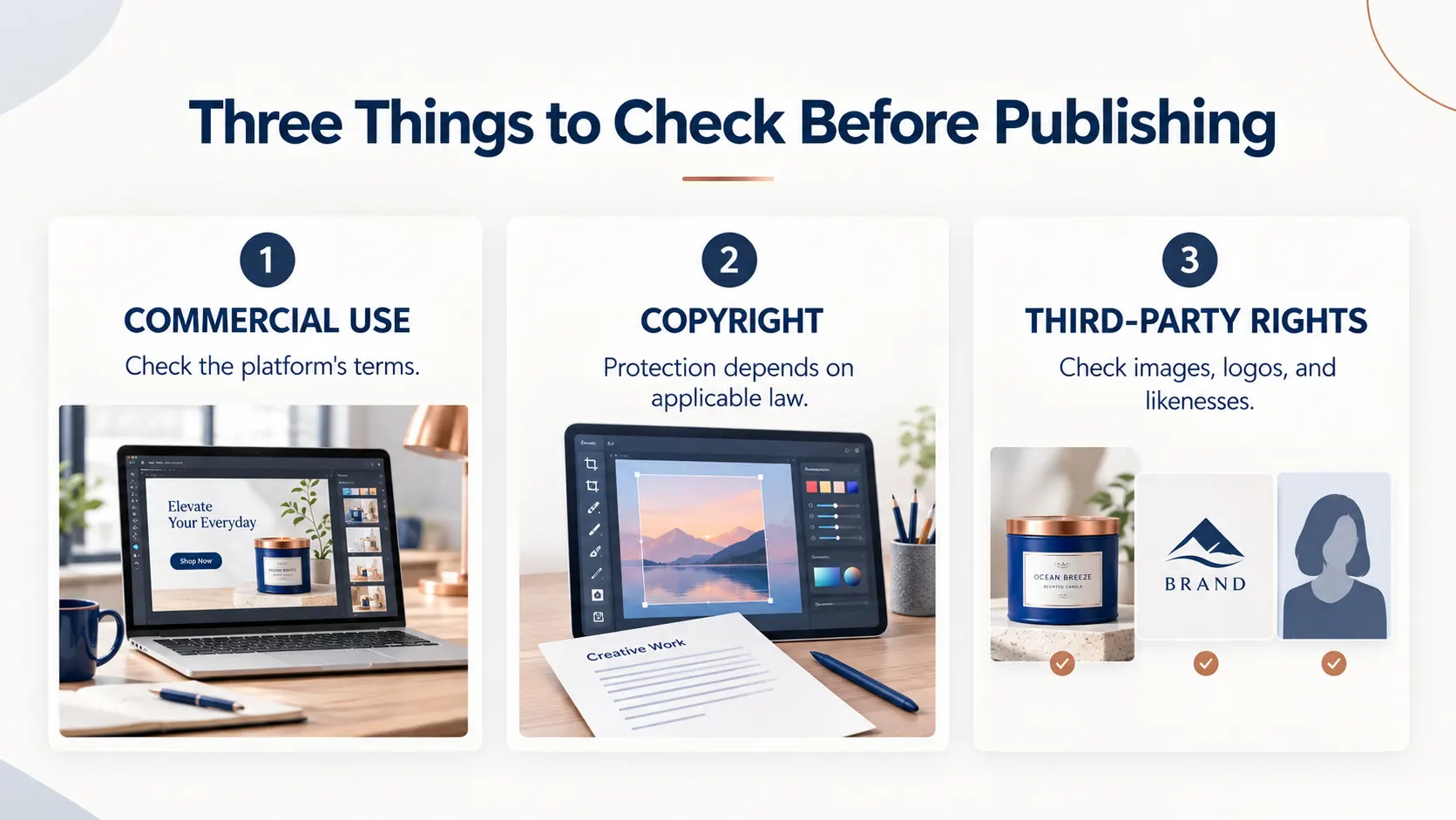
Yes, AI generated images may be used for commercial purposes, including advertising, ecommerce and client work, when the platform terms allow it. This permission does not necessarily grant copyright protection or rights to someone's photograph, logo or likeness. Review your inputs, the finished image and the applicable terms before publication.
Quick Answer
AI images can be used for commercial purposes, including advertising, ecommerce, and clients’ projects, if a particular platform allows such use. However, commercial usage availability does not mean that an image is protected by copyright, has exclusive ownership, or permission to use logos, photos, characters, or people’s likeness in it. Checking the terms of a particular tool, verifying the rights to the source material, and ensuring that the result represents the accurate product are essential before publishing. To use images commercially without any issues, keep the approval of a product’s specific attributes, add the necessary text separately, and double-check the last two stages.
Does Commercial Permission Mean You Own the Copyright?
No. Commercial rights, ownership and copyright are not one and the same thing.
A platform is able to permit advertising without granting you exclusive rights to it. Xelta’s March 2026 terms state that users own the outputs they make to the extent lawfully allowed, while specifically warning that results may not be unique and not be protected by copyright.
In the U.S., the Copyright Office states that protections only exist upon a showing of sufficient human authored expression in the work. Simply typing in a prompt may not be sufficient. Creative editing or arrangement might be important depending on the work and the laws of the relevant jurisdiction. For a valuable campaign identity you would be wise to consult a lawyer.
What Else Needs Permission Before You Publish?
Start with your uploads. Stock photography licences may restrict alterations or redistribution. Portraits need permission; celebrity images can raise publicity and endorsement concerns. Copying another brand's mascot or packaging is risky even when the software accepts the prompt.
| Asset or use | What to verify |
|---|---|
| Your own product photograph | Rights to the photograph and accurate product details |
| Stock or commissioned image | Licence scope, modifications and client usage |
| Recognisable person | Consent, likeness rights and implied endorsement |
| Generated logo or character | Similarity to existing branding and ability to protect it |
A commercial use clause from the generator cannot grant permission for rights held by third parties.
How Can You Build a Safer Product Image?
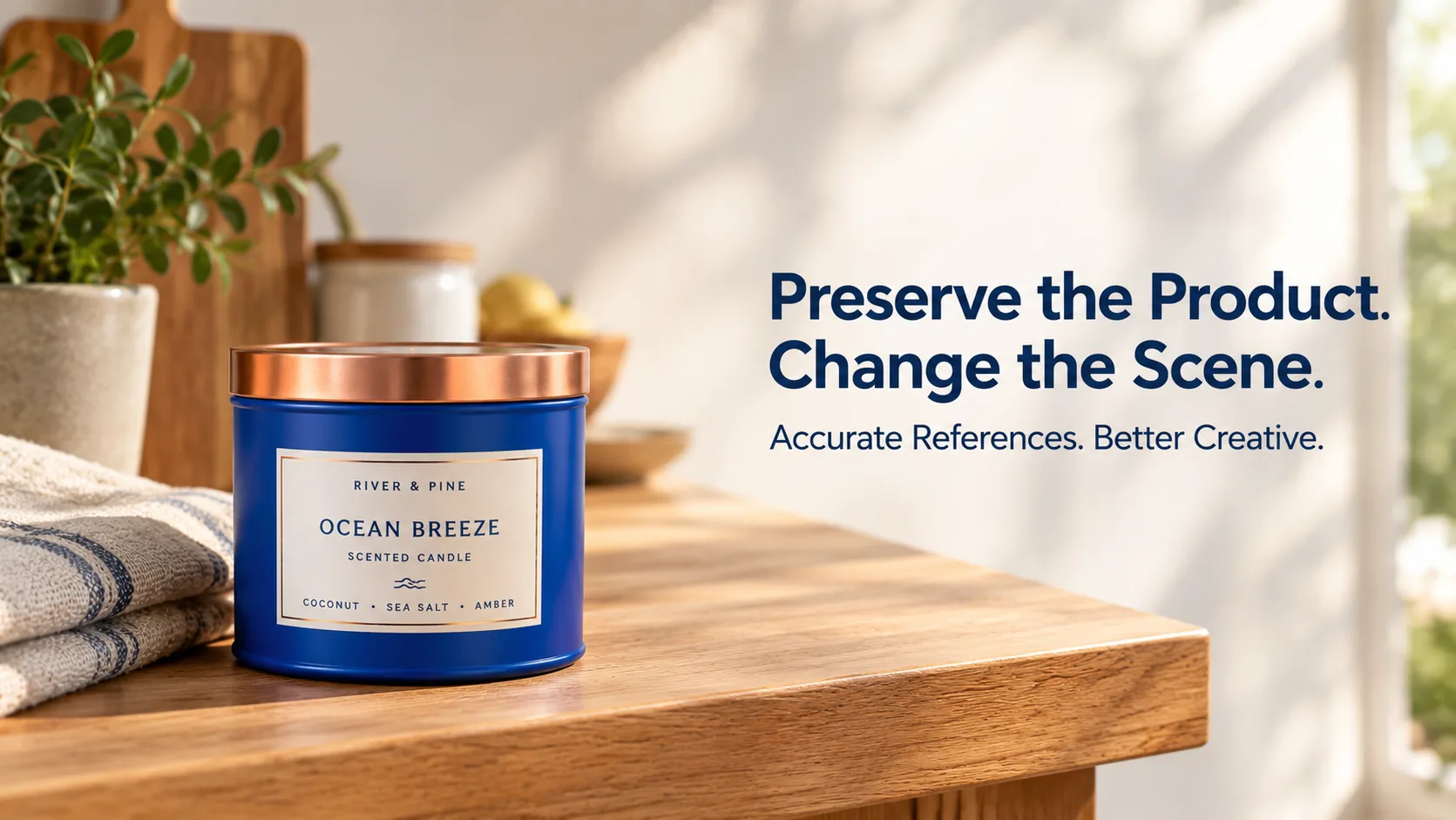
Take a cobalt blue candle tin with a copper lid and printed label. Change the setting, not the merchandise.
Xelta'sAI image generator supports written prompts and image references. Start with the manufacturer's approved packshot, then use a deliberately restrained instruction:
Place the supplied cobalt-blue candle tin on a wooden kitchen shelf beside a folded linen cloth. Warm afternoon light, soft shadows, clean background. Preserve the tin's proportions, copper lid and label placement. Do not add extra packaging, words, flames or product claims. Leave space on the right for the approved copy.
Compare the result with the packshot. If the label changes, reject the image as a product photograph. An imaginary scene may be fine for a clearly conceptual campaign, but it should not mislead shoppers about what arrives in the box.
What Should a Commercial Review Include?
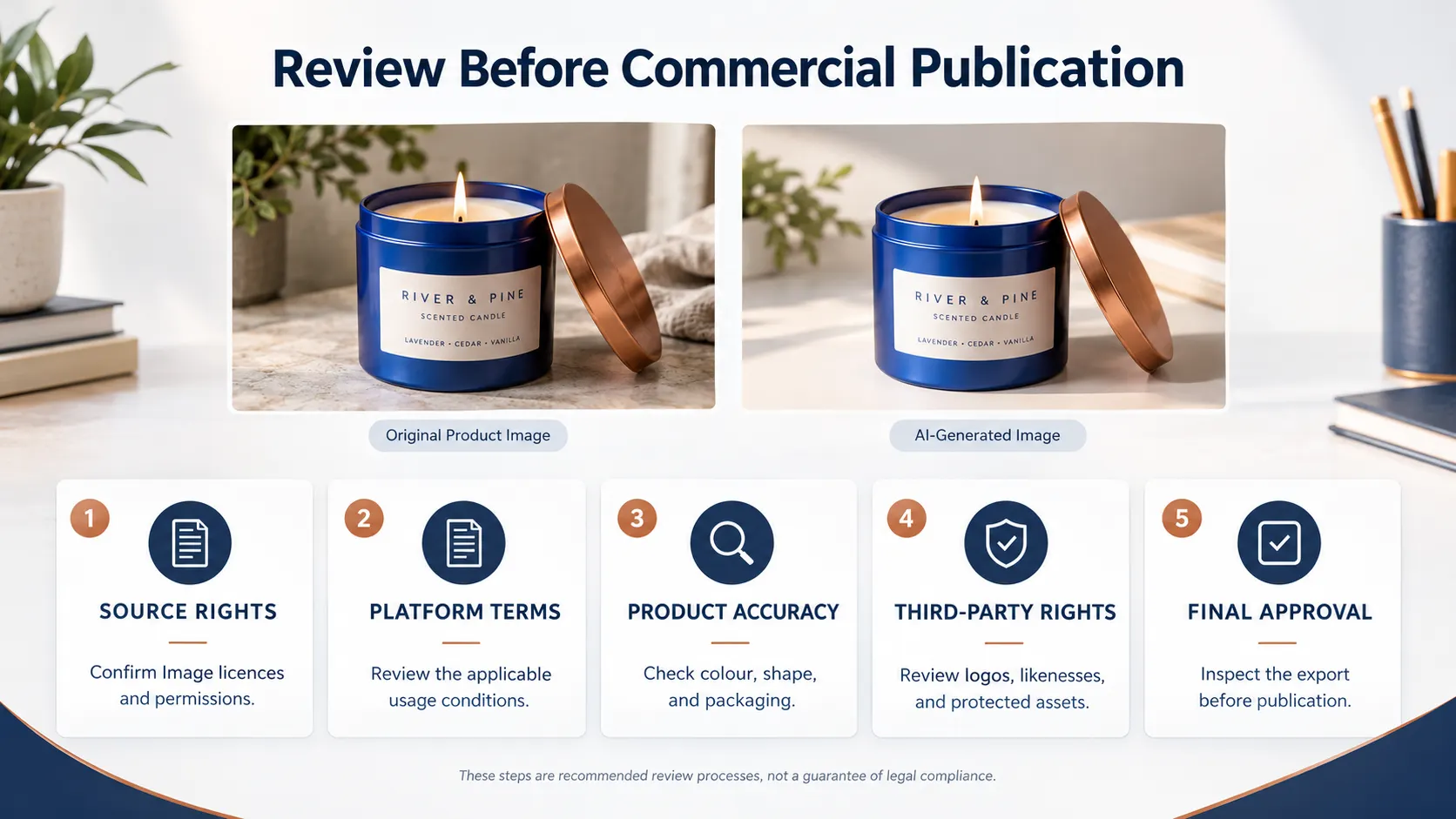
Use a short review that people will actually complete:
- Confirm the source. Save the original image, any licences and relevant consent records.
- Read the applicable terms. Check the selected tool, model and account conditions rather than relying on a general marketing promise.
- Compare the product. Inspect shape, colour, labels and any claims the scene implies.
- Review recognisable material. Look for familiar logos, fictional characters and real people's likenesses.
- Approve the export. Check dimensions, legibility, advertising rules and who signed off on the finished version.
Add verified price, ingredients and claims as editable text, not generated lettering.
When Is Editing Better Than Generating Again?
If the shelf works but lighting feels flat, edit rather than regenerate. Xelta'sPhoto Lab documents image enhancement, colour correction and background editing.
But editing is not a cure for missing rights. Retouching an unauthorised photograph does not make its licence problem disappear. Nor should colour correction turn a real navy product into an unavailable shade. Keep the approved original as your reference.
Final Thoughts
Commercial image creation is not a binary licensing issue. While permission from the generator is a start, the image will inevitably leave the creator’s hands, be it as a product detail, a paid ad or the client’s own promotion. At that stage, minor inaccuracies take on a new meaning and potentially damaging implications, and the presence of known characters or logos may involve third-party rights that the creator has no control over.
Develop a diligent attitude to the source files, their terms and approved changes. Start with one safe image, leave the product information intact and edit the text to reflect real world accuracy. When working with an image containing a character, a protected logo or other valuable asset, research the necessary approvals before publication. A reliable image is good, but an undisputed image is better.
For official visual-creation examples, exploreXelta AI on YouTube.