

Marketing Content for Interior Design: Ideas Clients Trust
A beautiful photo of a room attracts attention, but it does not always answer the most critical question that a prospective client may ask when they see your portfolio: can this designer solve the problem in my home? The marketing content for the interior design services should demonstrate the thought process and show that the proposed solution has addressed the client’s concerns. XELTA AI can help you brainstorm ideas, but the actual project details still require human approval and permission from the stakeholders.
The best way to do it is to create the marketing content around specific projects, presenting them similarly to the case study format. You may want to describe the before and after photos of a space, the brief, the constraint that had to be resolved, materials and furnishing recommendations, and the final outcome. The visual content created by AI should also have a disclaimer that the image has been generated. After that, you can match the content to the relevant social media channels and posts for your clients to consume.
Quick Answer
The best marketing content for an interior designer will feature not only beautiful pictures of the rooms but also tell a story about the choices made to design them. The designer should share their past projects, what materials they preferred to work with, their advice for small space owners, and how they approach the design process in their portfolio, social media, video content, and newsletters. An AI tool can help find inspiration and show how a room could look if the designer uses certain furniture or colors before the project is done and photos are taken. However, the computer-generated content should be labeled as such, and one should ask for permission to post any client pictures or testimonials on the website or social media. Mentioning exact figures will make the audience trust the experience level of the business and its experts.
What Are Clients Looking For Beyond Pretty Rooms?
Say you have someone who is petite and has a fairly small living room with two kids. What can you tell them about the nice picture of the sofa you sent them?
They probably need something that's easy to clean with plenty of traffic flow and low storage. You could also mention that an island may not be possible in the kitchen for obvious reasons. You need to address their concerns, but you also shouldn't overshare.
Which Interior Design Content Ideas Are Worth Posting?
-
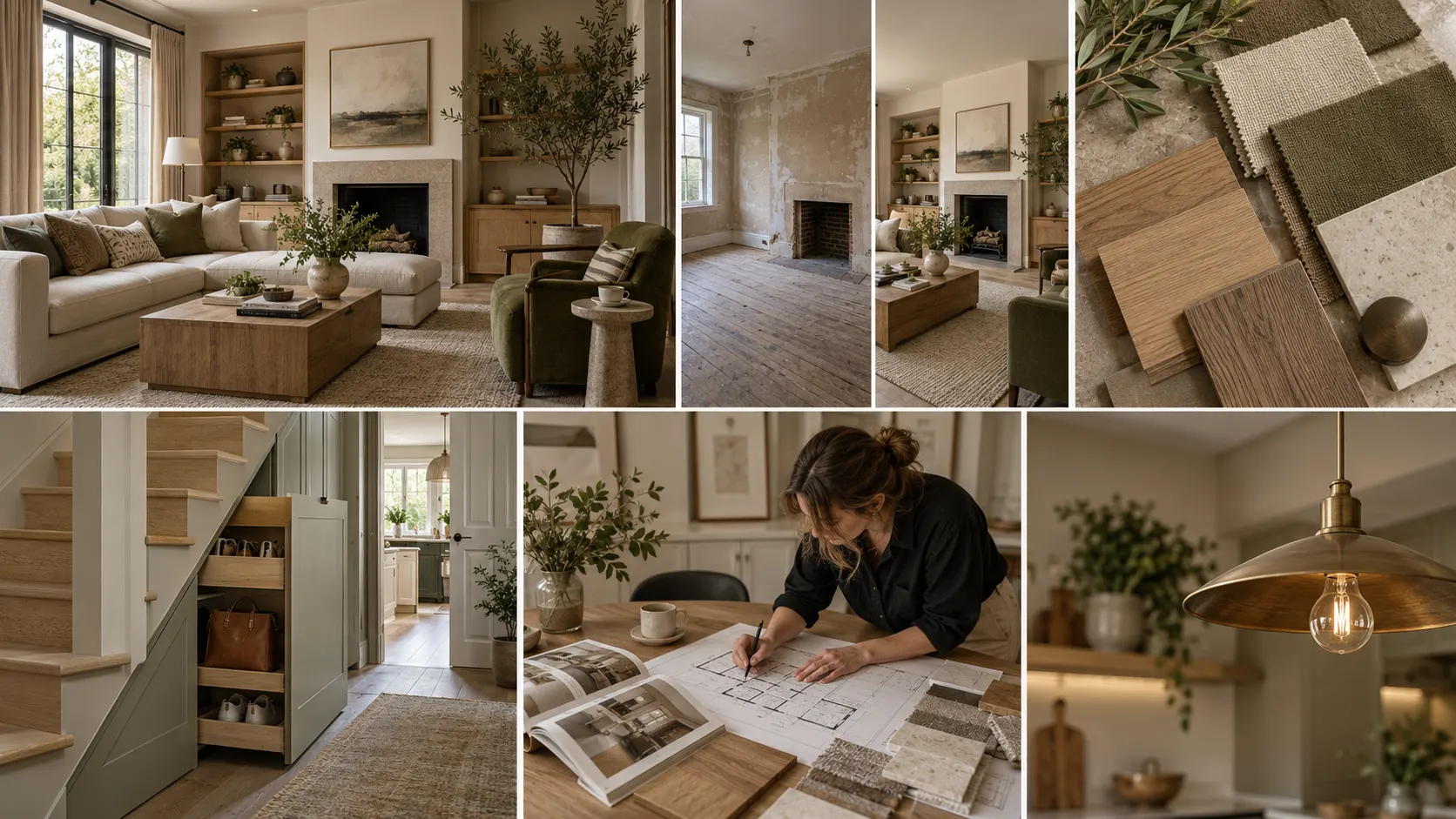
A project story. Show the original problem and your decision. “We kept the existing flooring and changed the lighting plan” says more than “Dream living room.”
-
A genuine before and after. Match the camera angle, explain the changes and never present an AI concept as the installed “after.”
-
A material decision. Compare two finishes, discussing maintenance and why one won. Avoid claims like “stain proof forever.”
-
A small space lesson. Explain a storage detail or tricky door swing. Make the lesson useful even to someone who won't hire you.
-
A process clip. Film a sketch or sample review. Explain what still needs client approval.
-
A client question. Answer “Can we keep our sofa?” or “What happens after the first concept?” Avoid generic sales pitches.
Where Should Each Idea Be Published?
One project can support several pieces without repeating the same photograph.
| Channel | Best angle | What to include |
|---|---|---|
| Portfolio page | Complete project story | Room photographs, constraints, your decisions |
| Instagram carousel | Before, problem, solution | Clear captions and one takeaway per slide |
| Short video | Process or design detail | Real footage, captions and client approved shots |
| Email newsletter | A lesson from the project | Material choice and a relevant enquiry invitation |
Make the portfolio page the full record. Share a smaller story on social media and direct interested visitors towards your enquiry page; no format guarantees leads.
How Can AI Help Before You Have Finished Photographs?
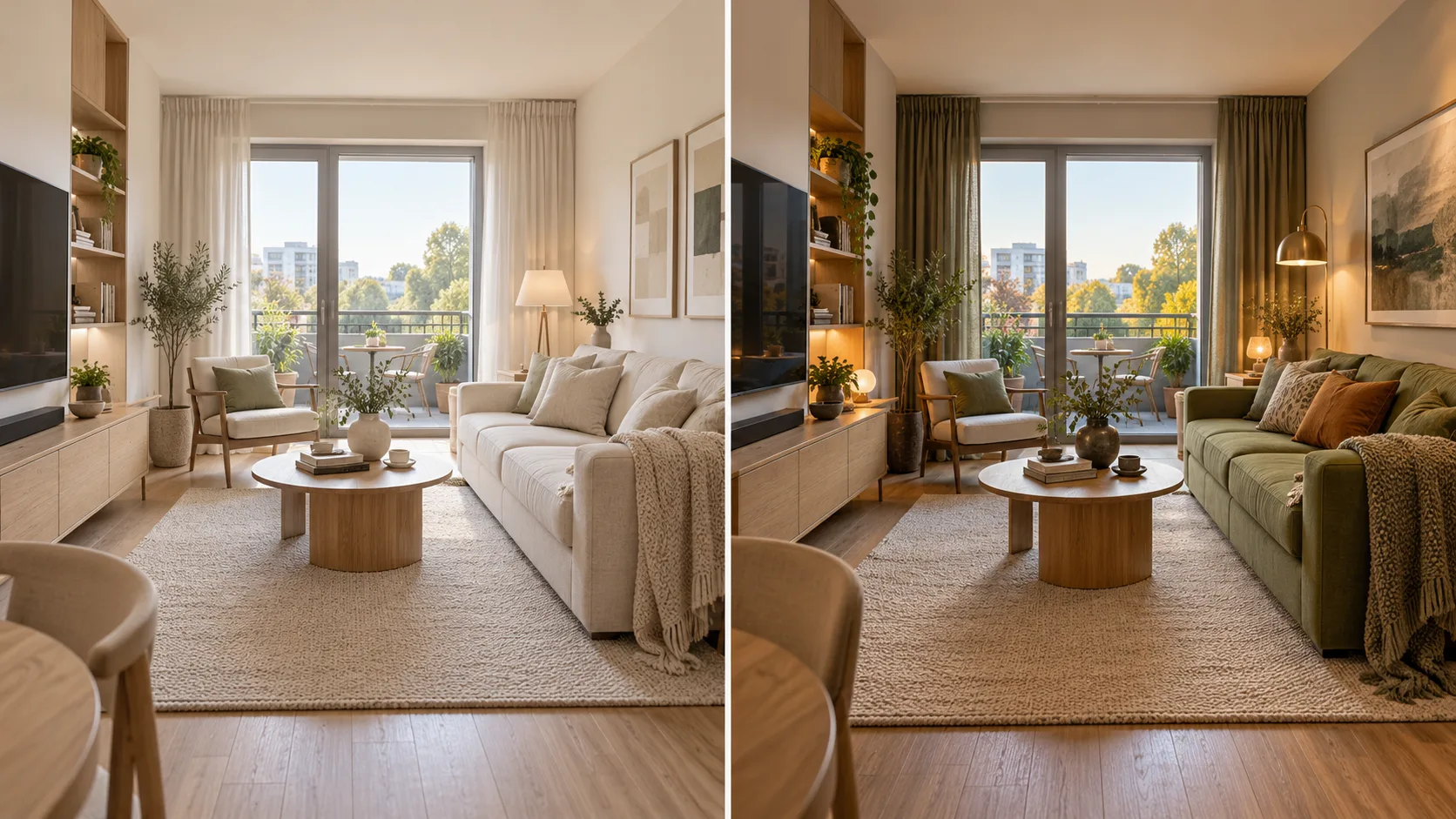
For an unbuilt room, Xelta's AI image generator can explore concepts using prompts or references. That's not evidence of completed work.
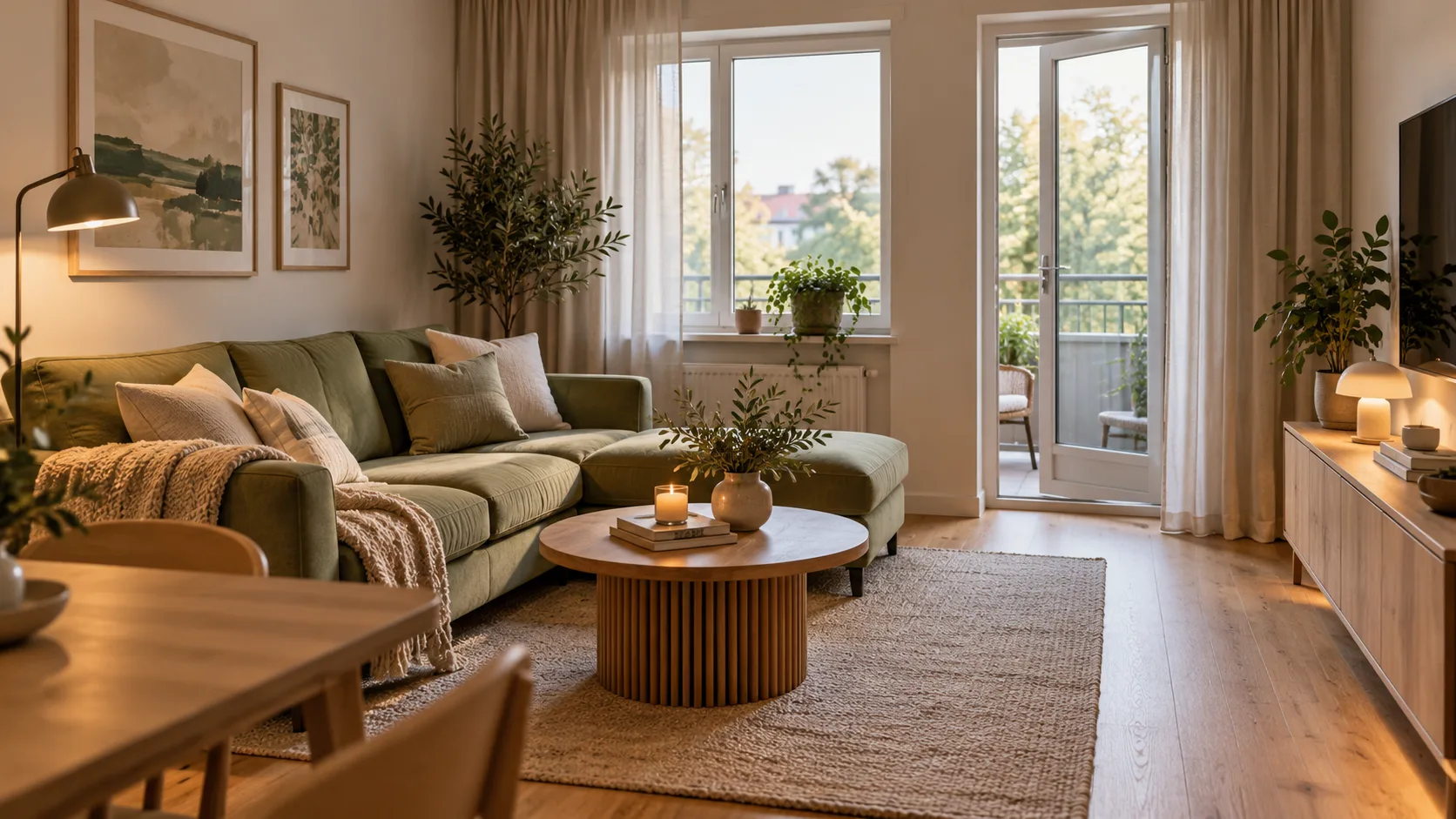
For the hypothetical rental with a fixed balcony door:
Design a cozy modern living room of your own design using the reference photo below. Keep the balcony door in the same place, maintain the window sizes, and stick to the wooden flooring. Consider pale olive upholstery, compact storage solutions, and warm task lighting. No changes in structure, fabricated windows or text are allowed. This is a concept photo not a completed project photo.
The image you provided cannot confirm any distances, practicality or the materials used so please be sure to add all the necessary text in the appropriate area using the editor below.
Can You Show Two Room Directions Without Confusing People?
Xelta's Home Design takes a picture of a room, style, and any personal instructions. Check out their minimal version and a more vibrant alternative.
Leave the same photo. Ask "Which is a more relaxing color palette?" instead of "Which is better?" Builders still require accurate scale copies of the design and approval.
Label the images AI generated design concept. Dismiss any imaginary windows or walls, as they will only lead to disappointment.
What Could You Publish From One Project This Week?
On Monday – post a picture of your completed project with a photo of the original design problem. On Wednesday – post a carousel of your choice explaining one of your material choices. On Friday – create a short video showcasing either a detail of the site or material sample discussion, and finish your week off with an update on your portfolio tying together those pieces, rather than a generic sales pitch asking prospects to inquire about planning a narrow living room.
What Should Never Be Passed Off as Portfolio Proof?
Do not combine synthetical "after" shots with completed works, check identifiable belongings and place details, and get permission before using people's residence or testimonials.
Portrait shots in your portfolio should be of the work actually done, conceptual renderings should be stored in a separate labeled category.
Final Thoughts
An interior designer’s most intriguing endeavors often lie in the final picture: choosing which spaces to fill, what materials to leave, which will stand the test and which a stunning concept is worth. These choices carry a far more interesting marketing story than a row of beautifully styled rooms.
Take a single real project from your portfolio and transform it into a set of smaller assets: an explainer from your work, a before and after, a material comparison and a brief process post. Use AI concepts where they help someone imagine an option and label them so nobody mistakes them for completed work. Next, watch which questions people ask and answer those in future content. If a person understands how you think, they’re better placed to decide whether to work with you.
For practical visual creation demonstrations, explore Xelta AI on YouTube.