

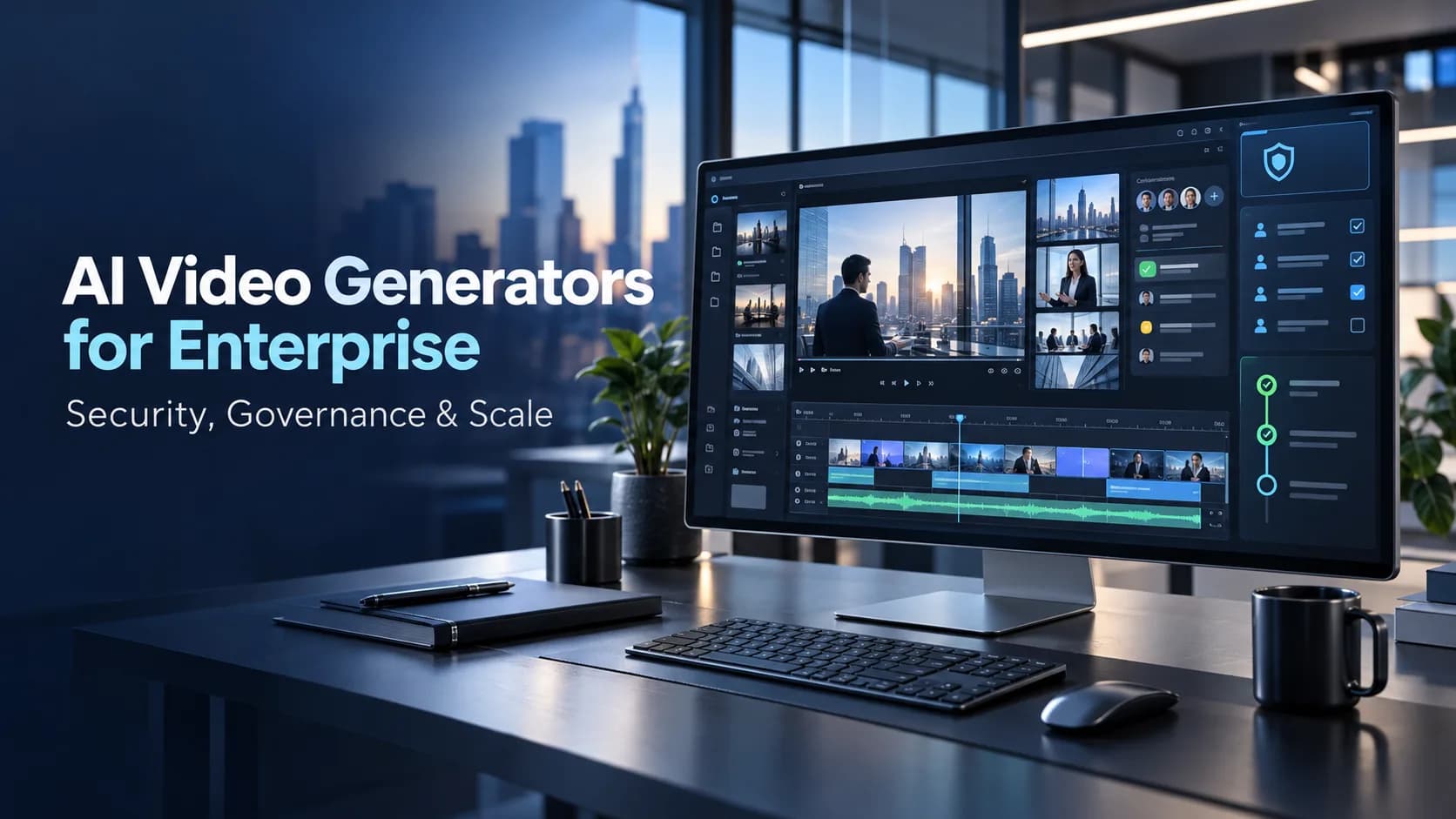
AI Video Generators for Enterprise: Security & Scale
A regional team has to produce twelve variations of the launch video. But who uploads an image of an unreleased product, an employee's face or a secret price before security clearance of the tool? When choosing an enterprise AI video generator, focus on what the company is allowed to disclose safely and not on how neat the preview turns out. Xelta AI promises to provide video content, but enterprise confirmation requires more than a successful rendering.
An enterprise AI video generator tool must ensure teams can create consistent videos and keep a hand on confidential input, access, approvals and costs. Study the written security provisions of a vendor, observe if rendered footage maintains the facts about the product and inspect if files are kept or purged. A compelling demonstration is the start of procurement, not the end that all requirements of an enterprise have been satisfied.
Quick Answer
An enterprise AI video generator should help teams create consistent videos while maintaining control over confidential data, user access, approvals, and production costs. Before adopting a tool, review its security documentation, access permissions, audit logs, data-retention policies, and support commitments. Test the workflow using approved or fictional assets before uploading sensitive material. Establish separate review stages for brand consistency, product accuracy, and legal compliance, and track every revision through final approval. For Xelta AI, request written confirmation of the security controls, certification status, retention terms, and enterprise features included in your contract before scaling production.
What Makes Enterprise Video Different From a Solo Project?
One creator can choose to regenerate a clip. A company needs brand, legal and regional reviewers, who will approve scripts, source photos, and markets.
Treat prompts, recordings, and videos as business objects. Owners and access permissions should be set.
Which Security Questions Need Written Answers?
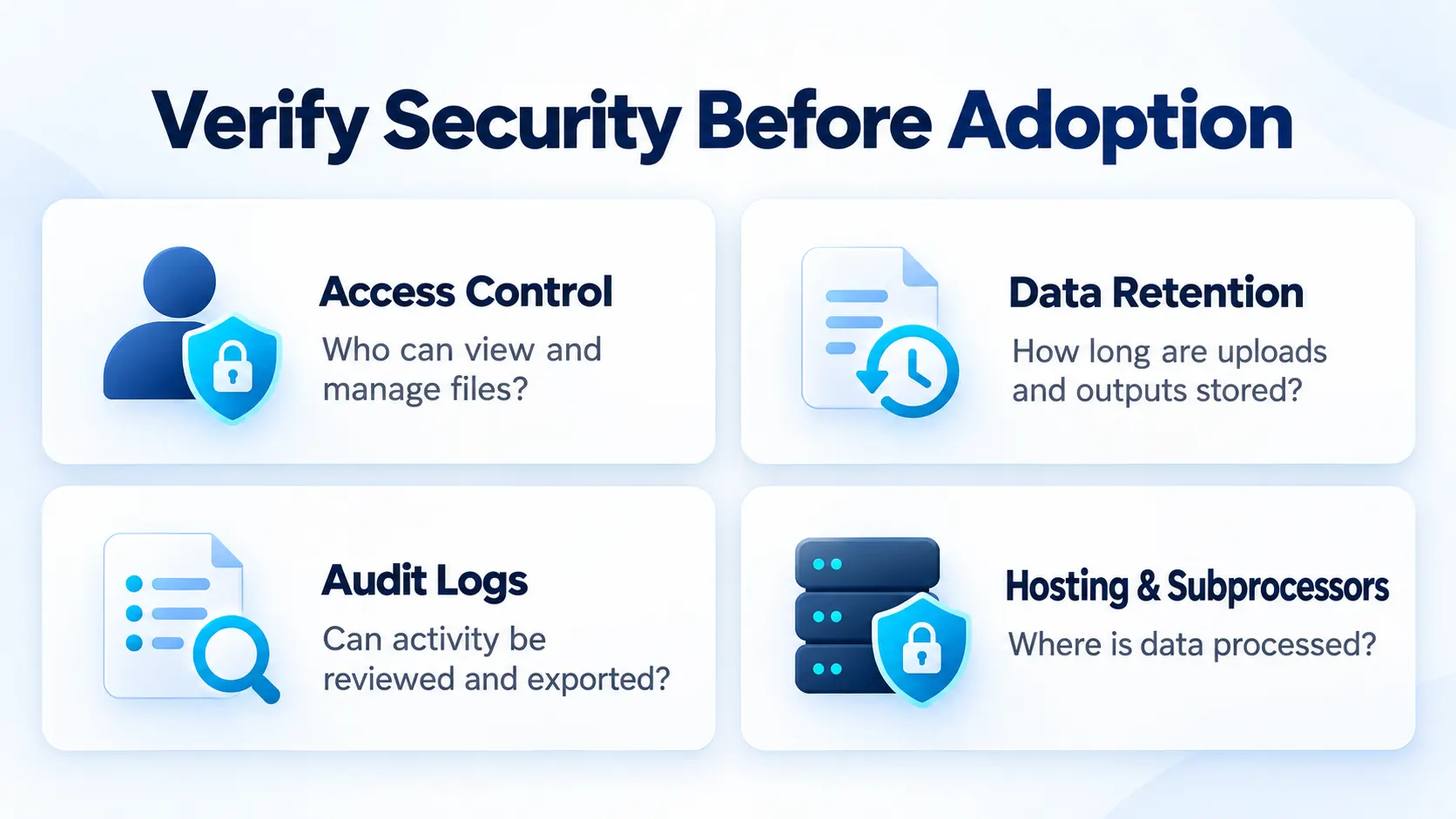
Ask for security documents covering the specific service and plan.
| Question | Evidence to request |
|---|---|
| Who can see our uploads? | Access roles and administrator controls |
| Where does the media go? | Hosting regions and subprocessors |
| How long are files kept? | Retention and deletion schedule |
| Can activity be traced? | Audit-log examples and export options |
| What happens during an outage? | Contracted support and service commitments |
Xelta's public enterprise page covers SSO, role based permissions and audit logs. Its separate security page states that a completed SOC 2 Type I/l or ISO 27001 certificate is not currently published.
Don't take an advertised compliance claim for third party certified status. Request current evidence and have your security team review it.
How Should Approvals Work Across Departments?
Begin with an approved brief defining the target audience for your content, key product facts, and permissible imagery and claims. A marketer may tweak the environment but cannot invent a price.
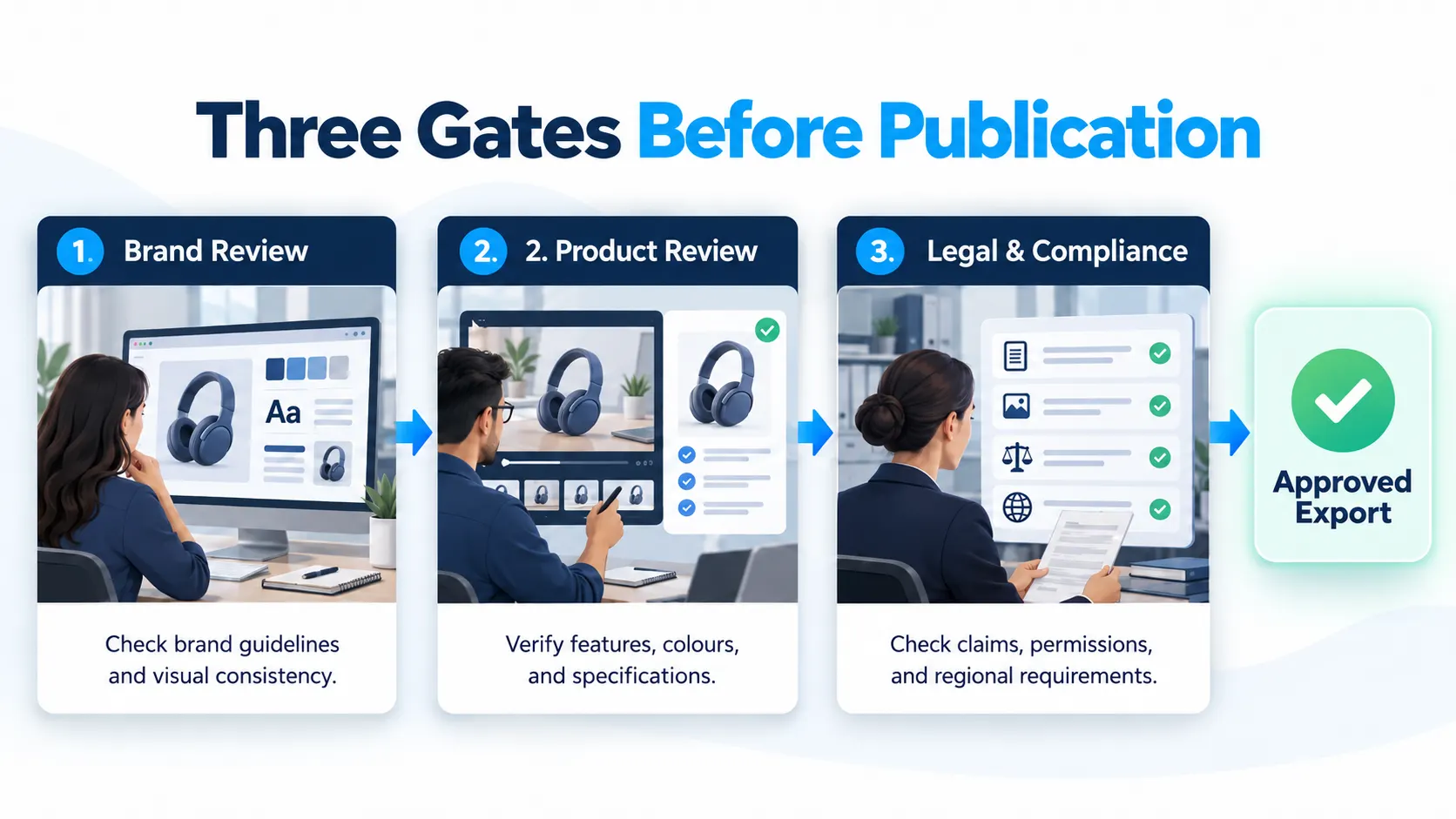
Use three gates for approval: brand checks vision, product owners check technical details, and legal or compliance reviews permissible claims and rights.
Record the final export and who approved it. Wrong product colour should still block the publication even if the video looks good.
How Can You Run a Safe Video Pilot?
Pilot it with approved or fictional assets. Xelta's AI video generator allows using text-to-video and image-to-video, so you can test them both without disclosing an unreleased product.
Use a brief for a fictional countertop speaker, e.g.:
Animate the attached speaker image in a single steady six second camera movement. Keep the two buttons, the grille shape and the matte grey finish intact. Use a neutral studio background. Do not invent any labels, features, people, or claims.
Next, try a controlled sequence**:**
- Save the source image, prompt, model choice and settings
- Check every frame for shape, text or movement errors
- Request one revision without changing approved product details
- Export the video for a second, non writing reviewer
This will expose the effort and traceability behind the revision. It also checks if another person can understand the result compared to the prompt they did not write.
What Does Scaling Actually Mean?
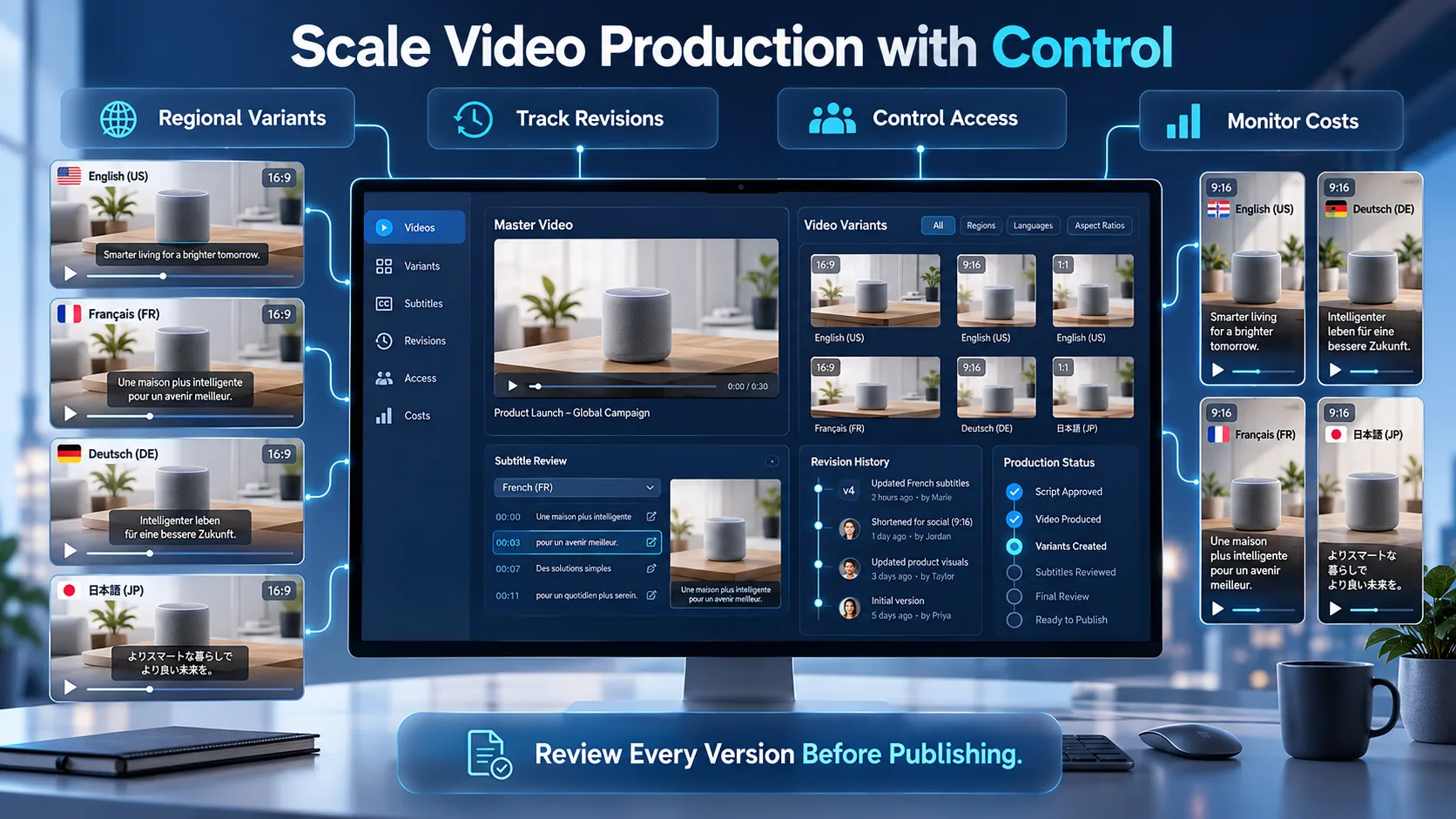
High volumes do not necessarily mean actual publishing of clips for use. It would be a must to test the language, horizontal and vertical crops, subtitle safe areas, and product appearance consistencies for each version prior to recording their brief and approval status.
But how would it be possible to revoke access in case the employee has left the company? What happens if the rendering model is unavailable? Finding out the limits of the software, extra costs for generations, escalation options, and support for keeping the assets available for approval after would also be a must.
These issues turn out to be especially relevant if the production of videos turns into a regular business and no longer is an occasional experiment.
What Should You Verify About Xelta's Enterprise Offering?
Xelt a's enterprise provides shared workspaces, seat and credit controls, SSO, dedicated infrastructure and custom support, confirming which terms are included in your contract.
There also appears to be a practical, documentation question, namely, that Xelt a's public terms state that generated content is retained for seven days, while its privacy policy states something else.
Ask for a definitive schedule covering uploads, outputs and backups, rather than assuming either page governs your enterprise agreement.
Final Thoughts
A video generator is valuable enough for the enterprise if it helps design an agile marketing work flow without compromising the security and approval process around it. The pilot should focus on the tool’s lowest risk to traceability and how it would incorporate approved inputs into the publication process. Instead of measuring the number of videos produced, the success metric would be a count of the delivered and approved videos without misunderstandings and rework.
The Xelta video and enterprise pages offer some insight into the tool, but clarifying expectations is necessary before exposing a broader audience to the tool. Ask for written responses to your data governance, audit trail, roles, retention, and support-related concerns.
Lastly, perform a stress test by introducing a hypothetical scenario where the enterprise has to make a significant late correction to a video in multiple markets. Determine which process allows for the best control and traceability over the changes rather than which produces the most impressive video.
For official video workflows and demonstrations, exploreXelta AI on YouTube.