

Key Takeaways
- A convincing talking head advertisement can be spoiled by the very fact that the speaker is inventing an experience or the product being advertised changes part way through.
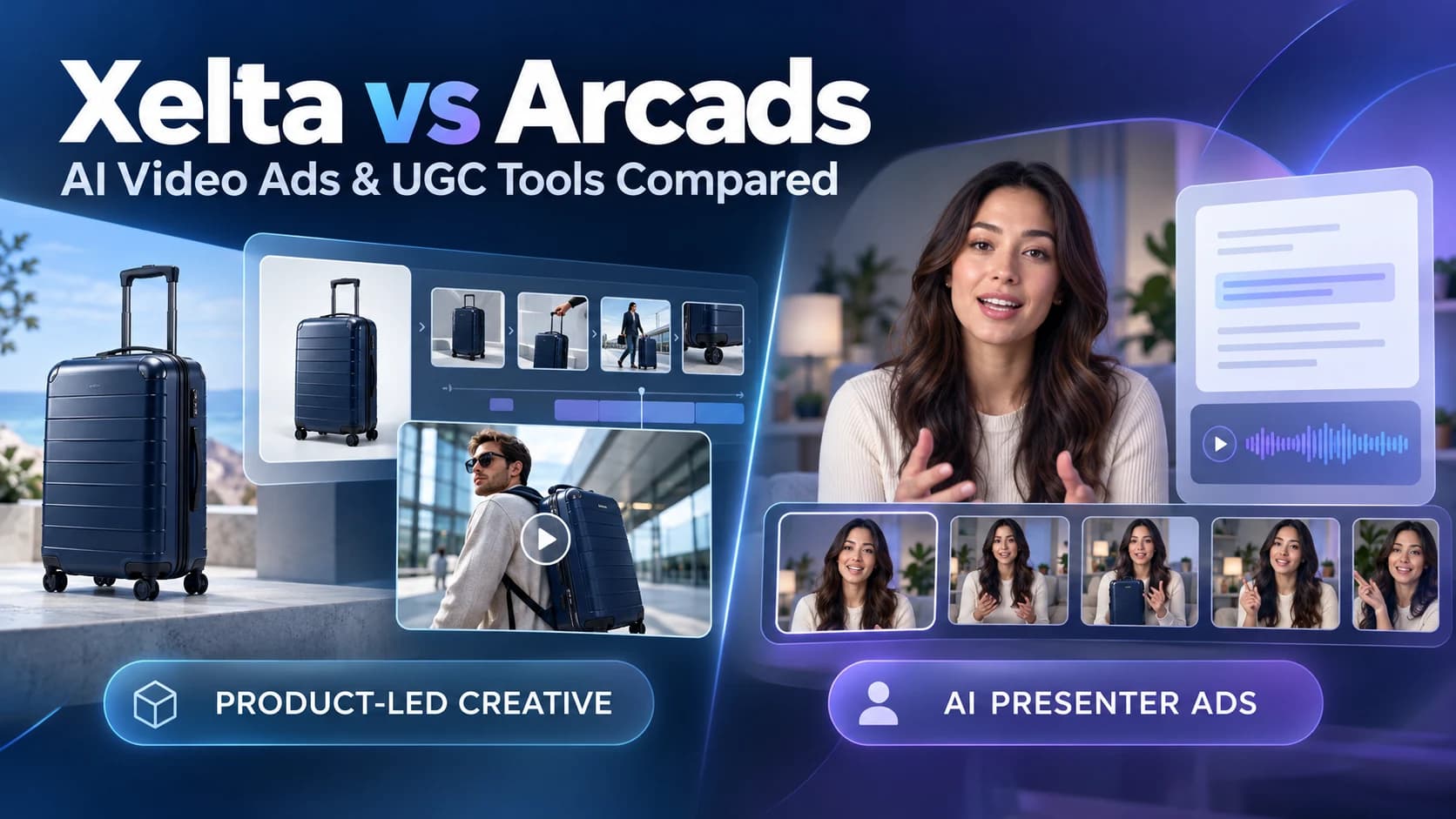
- Xelta and Arcads represent two different creative approaches to AI video ad production.
- Arcads centres on scripts, AI actors and voice delivery, with captions, languages and batch variations.
- Imagine advertising a navy carry on bag.
Table of Contents
- 1.Xelta vs Arcads
- 2.Quick Answer
- 3.Where Do the Two Platforms Actually Differ?
- 4.Which Tool Makes More Sense for a Talking Person Ad?
- 5.What Would a Fair Prompt Test Look Like?
- 6.How Should You Compare Revisions and Costs?
- 7.Where Does Xelta's UGC Workflow Fit?
- 8.Which Quality Problems Should Stop Publication?
- 9.Final Thoughts
Xelta vs Arcads
A convincing talking head advertisement can be spoiled by the very fact that the speaker is inventing an experience or the product being advertised changes part way through. Xelta vs Arcads is therefore a question of workflow, not just avatars. Both create creator style advertising but will the output withstand approval? Xelta AI also offers a wider range of video tools making the choice worth examining carefully.
Quick Answer: Use Arcads if scripts, AI speakers, voice delivery and multiple variations of a presenter are key to your campaigns. Try Xelta if you want product image lead UGC advertising as well as general video production and storyboard based ad production. Neither can verify a product claim and neither can replace a real customer testimonial. Test them on the same approved brief.
Quick Answer
Xelta and Arcads represent two different creative approaches to AI video ad production. Arcads seems a good choice for the campaigns, which benefit from AI driven actors, scripted delivery, multi voice options, and varied presenters in ad series. Xelta is more attractive for product image based user generated ad campaigns, video creation with AI, and storyboards-based video ad production. The most value for the money can be achieved through product image UGC, AI powered video, and storyboard-based ad campaigns, depending on the campaign’s format, necessary product precision, revision needs, and final approval cost. It is recommended to test both services using the same product image, approved script, and creative brief. Double check everything before posting, including product information, verbal descriptions, lip sync quality, captions, permissions, and mobile friendly cropping. It is impossible to skip the manual approval of each ad campaign video.
Where Do the Two Platforms Actually Differ?
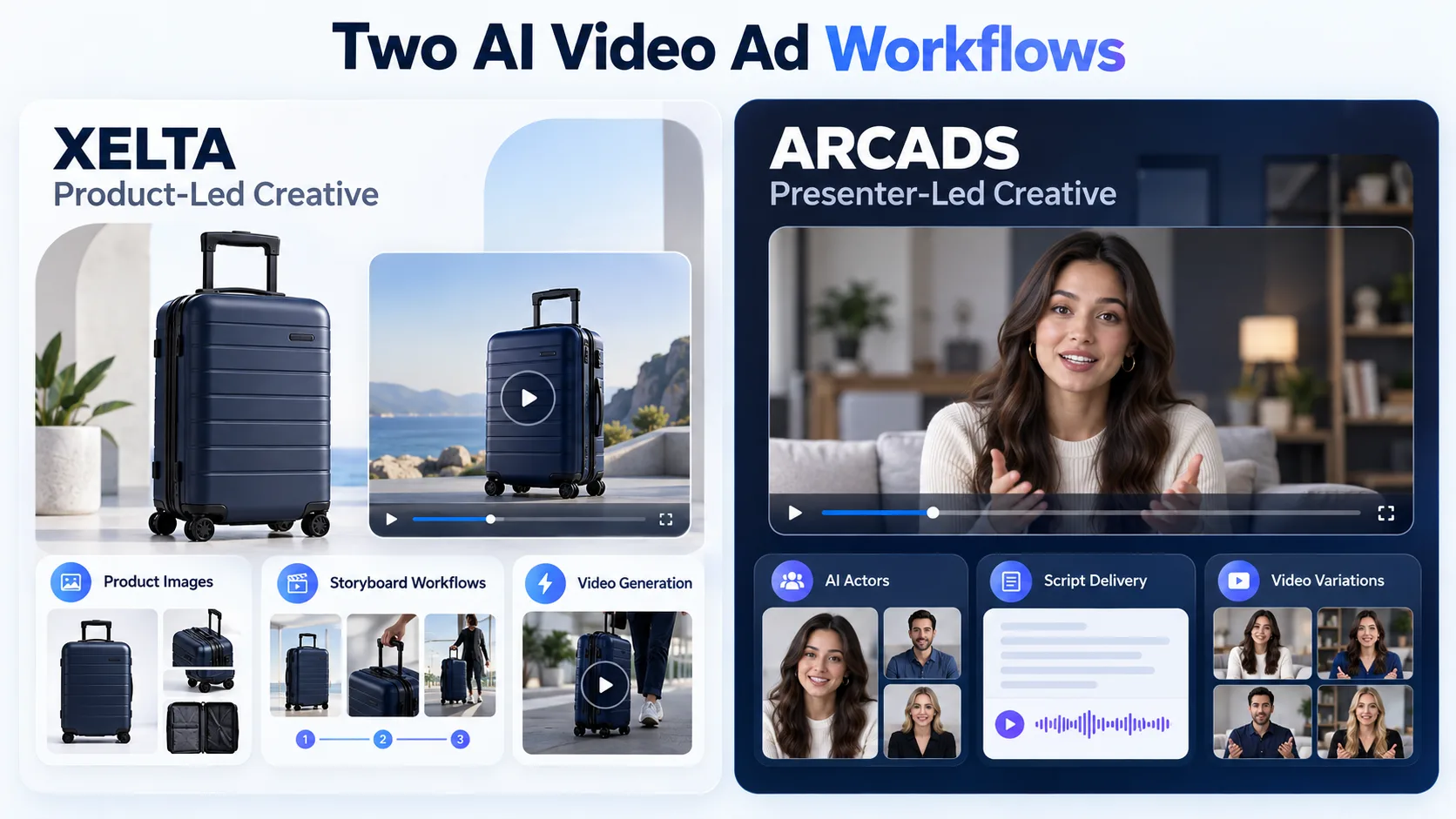
Arcads centres on scripts, AI actors and voice delivery, with captions, languages and batch variations.
Xelta's UGC Ads starts with a product image, creator templates and an optional script. Its Ad Maker builds a brief and storyboard before rendering.
| Buying question | Xelta | Arcads |
|---|---|---|
| What can start the ad? | Product image and creative instructions | Script, product image or prompt, depending on workflow |
| Creator-style delivery? | UGC templates and an AI presenter | Actor library and talking performance options |
| Product-led alternatives? | Ad Maker and general video workflows | Product ads and AI video-model clips |
| Scaling variations? | Check the relevant workflow and plan | Documented batch workflows across actors and languages |
These are documented features, not head-to-head test results.
The difference matters when the brief changes. A campaign built around a person answering objections needs believable delivery, clear speech and repeatable scripts. A campaign built around an object needs faithful shape, colour and handling. Buying an actor workflow to solve a product accuracy problem or vice versa can leave the real bottleneck untouched.
Which Tool Makes More Sense for a Talking Person Ad?
Imagine advertising a navy carry on bag. Arcads fits a script delivered directly to camera, with actor selection and speech controls.
But a synthetic presenter saying, “I've travelled with this for years” invents personal experience. Describe the product instead; never imply the actor is a verified customer.
What Would a Fair Prompt Test Look Like?
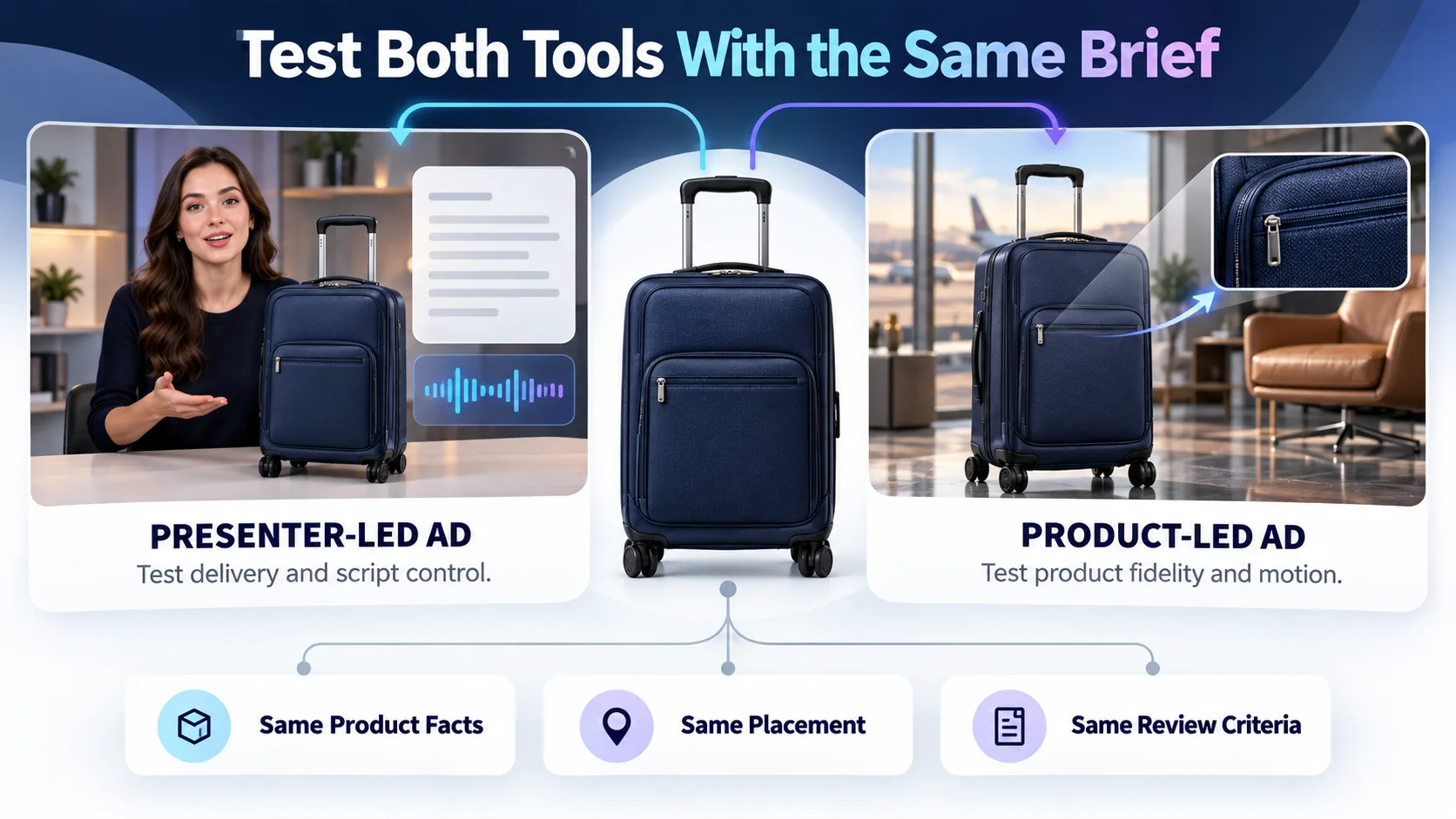
Use the same approved photo, placement and facts: navy bag, one pocket, no verified airline size claim. For a presenter led ad:
“Open by asking how people keep small essentials accessible while travelling. Show the supplied navy carry on with its single front pocket. The speaker should describe the visible pocket without claiming personal ownership or airline approval. Friendly, conversational delivery. Finish by inviting viewers to check the product details.”
For a visual first alternative, use Xelta'sAI video generator with a source image brief:
“Animate the supplied navy carry on standing beside an airport lounge chair. Slow camera moves towards the front pocket. Keep the zipper, handle, wheels and proportions unchanged. No invented labels, hands or additional compartments.”
These test different outcomes: presenter delivery versus product continuity. Judge each against its intended job.
How Should You Compare Revisions and Costs?
Keep the trial small and repeatable. Do not treat a longer, more expensive generation as automatically better. If the audience needs only a quick product explanation, a shorter clip may be easier to review and less likely to introduce continuity errors.
- Lock the brief. Set the product facts, script, output ratio and prohibited claims.
- Create a baseline. Save the inputs and note the credits charged.
- Request one revision. Change the opening line without changing the product or voice direction.
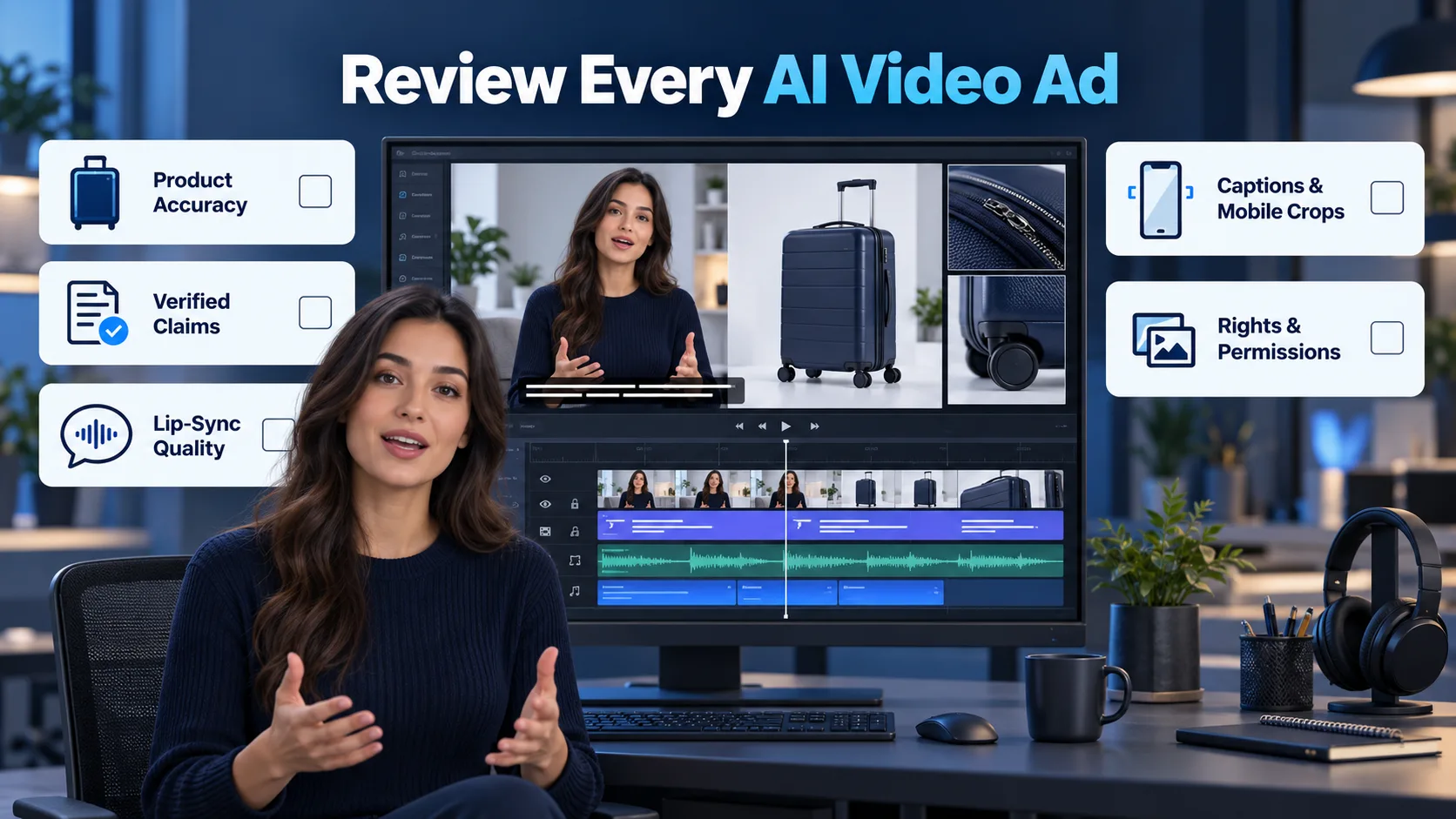
- Check the export. Review lip sync, captions, product details and mobile crop.
- Record repair work. Include edits completed outside the platform.
Arcads notes that actor-video credit rates can vary by account. Xelta displays UGC costs before generation. Compare cost per approved ad, including retries.
Where Does Xelta's UGC Workflow Fit?
Xelta'sUGC Ads accepts a product image, creator template and optional script or avatar image. It's designed for product led creator style videos.
Check the grip, spoken claims and sound-off opening. For structured product scenes, its storyboard led Ad Maker may fit better.
Which Quality Problems Should Stop Publication?
Reject fabricated endorsements, distorted packaging, wrong prices and unsupported claims. Watch faces and hands throughout; check subtitle timing and mobile safe zones.
A realistic avatar isn't proof of authenticity. Check likeness permissions, music, disclosure rules and platform policies before launching.
Final Thoughts
Arcads is worth consideration if your testing programme is built around varied presenters reading approved lines, or you require multiple iterations of the same language or actor. Meanwhile, Xelta is the preferred option if the campaign is set to use either a product shot as a starting point and then move into creator led videos, or require animation or storyboard driven commercials.
Do not make the decision based on what appears on the homepage. Instead, issue a brief that includes an impossible to act on specification, such as a particular type of zip, or something the speaker is expressly not allowed to say. Then ask them to amend a single line and observe the impact on the rest of the text. Keep the source image available to the exporter at all times and ask a colleague to take a look at the end result. The choice is simple between which offers the best value proposition to the client, protects the product, allows easy amends and provides the team with something fit to be published.
For more Xelta creative examples and walkthroughs, exploreXelta AI on YouTube.