

Which Creative Platform Is Better in 2026?
Creating an impressive image with the help of an AI is easy. But creating a whole content series with the same characters, the overall look and the marketing theme is much more difficult.
A creator may want to have recurring characters for their short films while a business may want to have videos, educational content, social media posts, and ads that would have a certain feel and recognizable theme.
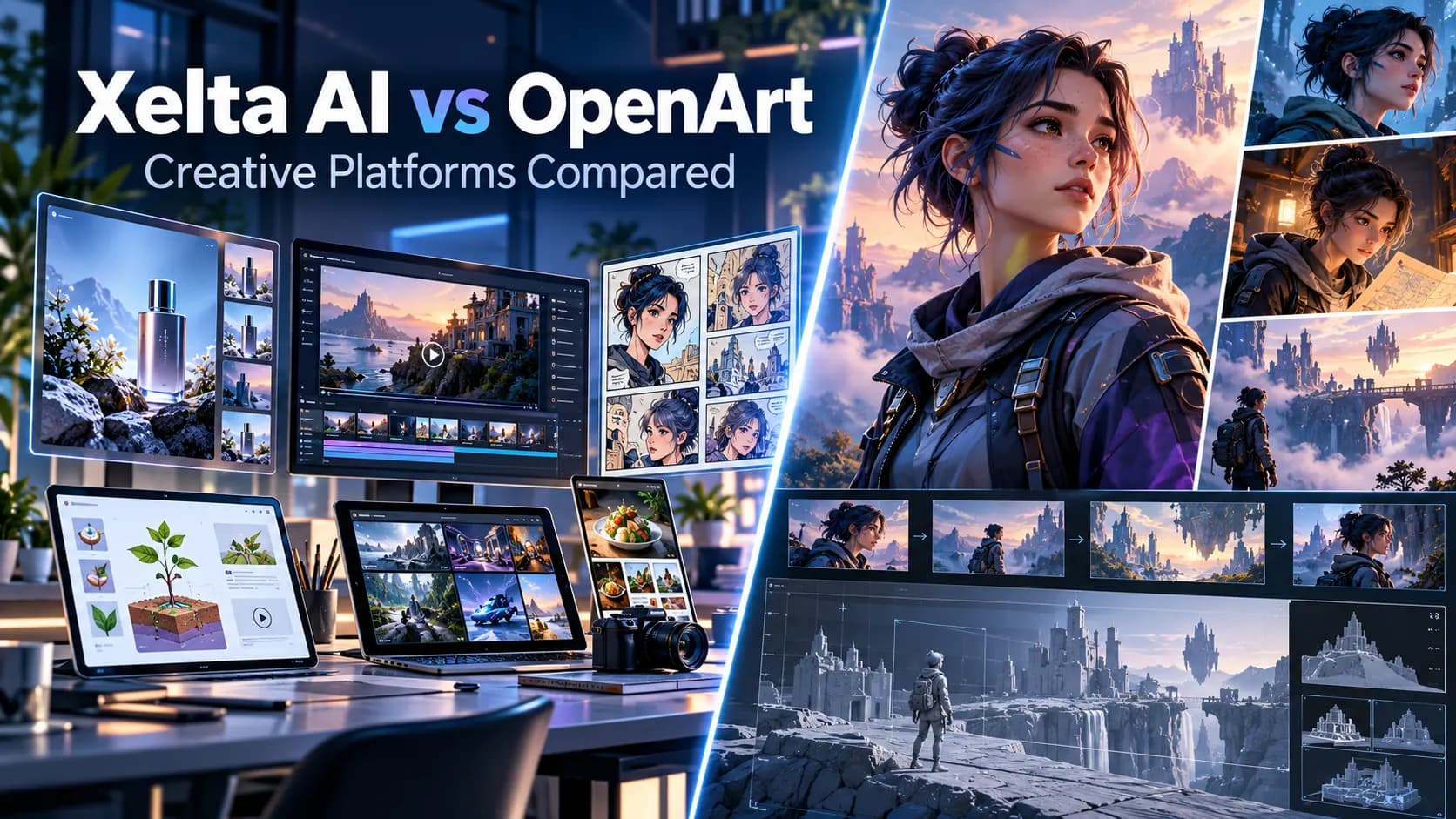
The Xelta AI vs OpenArt comparison can help you understand which tool is more fitting for your needs.
Both the Xelta AI and the OpenArt provide AI image making, video creation and editing, story telling and other services. But the two services prioritize different parts of the creative process.
Quick Answer
Xelta AI and OpenArt serve different purposes as far as creativity tools go. OpenArt is great for those who want to focus on characters that repeat in a series, have an easy way to converse for film direction, or need to utilize the same 3D environments. XELTA is a fantastic choice for businesses and those who want to specifically harness their AI for advertising, storytelling, comics, educational material, or social media. XELTA also has a slightly lower barrier to entry with their subscription and one time credit purchase, but the value would be determined by the tools needed and how much is spent on generations. It is best to compare the two services with the same creative premise and see which has better character consistency, quality of results, editing needs, and the cost for approved content.
Key Differences at a Glance
| Feature | Xelta AI | OpenArt |
|---|---|---|
| AI image generation | Yes | Yes |
| AI video generation | Yes | Yes |
| Consistent characters | Script, character and editing tools | Dedicated Character Builder |
| AI storytelling | Microdrama, cinematic and comic workflows | Director and One Click Stories |
| AI advertisements | Dedicated ad workflows | Director product, UGC and branding ads |
| Product URL to Ads | Dedicated workflow | Not a highlighted standalone workflow |
| AI comic creation | Comic Flow | Image and story creation tools |
| Educational content | Dedicated Microcourse workflow | Video and explainer creation |
| 3D creation | AI 3D tools | Navigable 3D Worlds |
| Social publishing | Dedicated autopost tools | Content creation and export |
| Entry subscription | $10/month | $13/seat/month promotional |
| One-time credits | From $6 | Subscription based credit add ons |
The main difference: OpenArt emphasizes creative direction, character continuity and model flexibility. Xelta combines creative generation with specialized workflows for advertising, education, storytelling and social content production.
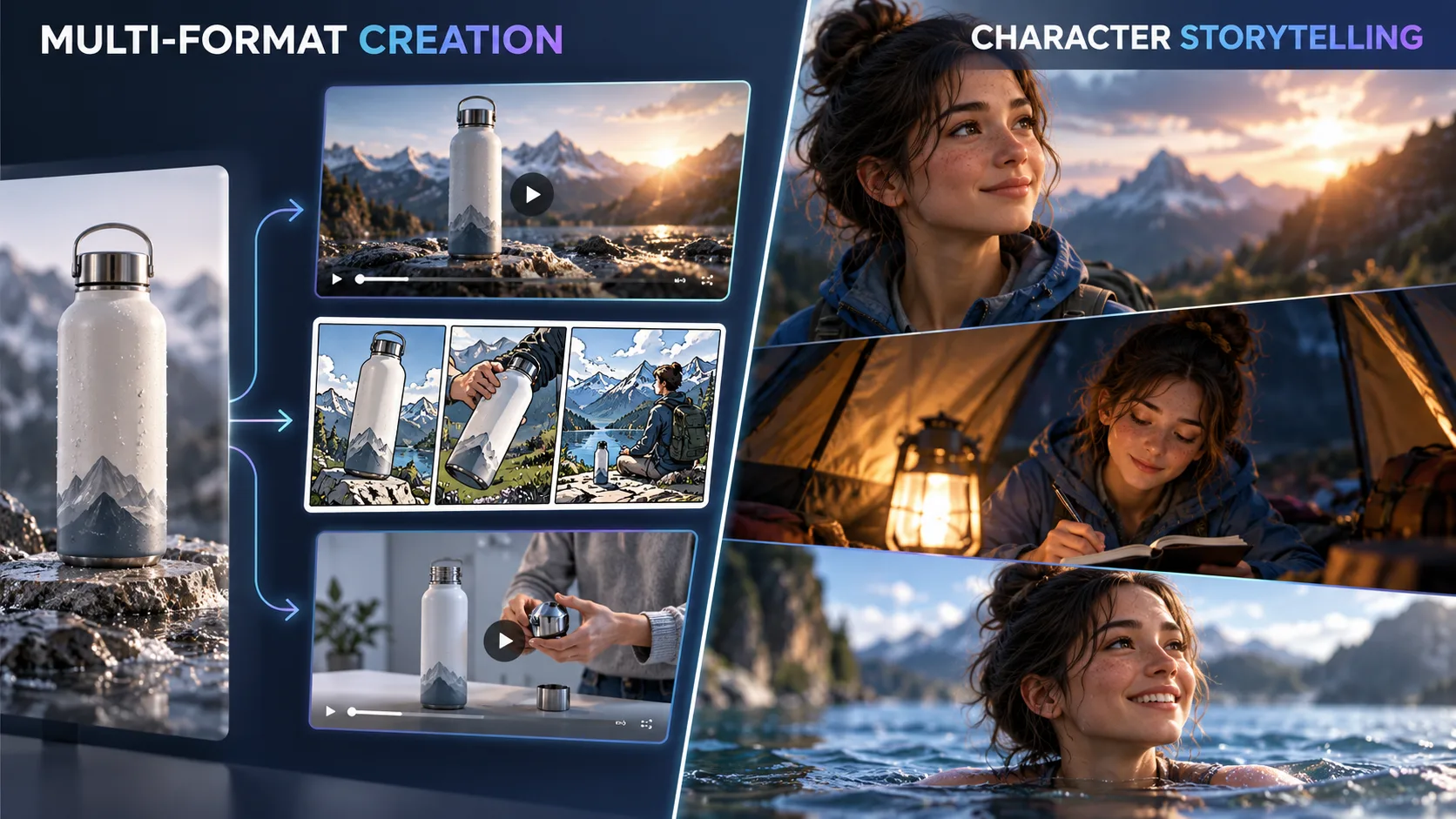
How Do Xelta and OpenArt Approach AI Storytelling?
Storytelling requires more than generating individual video clips. Characters, locations, dialogue and visual style need to remain recognizable throughout a sequence.
OpenArt: Character Continuity and Conversational Direction
OpenArt provides a dedicated Character Builder that lets users create and reuse recognizable characters across images and videos.
OpenArt Director expands this approach by letting creators describe scenes, adjust visual direction through conversation and produce connected sequences.
Its features include :
- Character and scene consistency across multiple shots.
- AI assisted story development and editing.
- One Click Story generation.
- Film trailers, music videos and microdramas.
- Navigable 3D Worlds for building environments.
These capabilities make OpenArt especially interesting for creators developing recurring animated characters, short films or fictional environments.
Xelta: Multiple Ways to Turn Stories Into Content
Xelta utilizes multiple dedicated production tools to design stories.
Microdrama and Anime Microdrama cater to serialized visual narrative production, while Script & Character aid in character led creative development.
Comic Flow presents another option: presenting a narrative using illustrated comic panels, rather than video.
Xelta also provides Movie Trailer, Cinematic Studio and Microcourse workflows.
A variety of tools are important if a creative idea is to evolve into multiple types of content.
A character developed for a story could also form the basis of an illustrated sequence, an educational video or a promotional campaign.
Verdict: OpenArt has a notable advantage in its dedicated reusable character system and conversational Director. Xelta offers a compelling alternative to creators who wish to develop stories across several distinct formats.
Why Is Xelta Useful for Marketing Focused Creative Work?
Creating attractive visuals is not the sole marketing component. One has to advertise products, come up with ideas, and prepare content for various platforms.
Xelta has multiple tools for such advertising tasks built in.
The AI Ads section lists Instant Ad, Ad Maker, Prime Ad, Street Ad, UGC Ads, Giant Ads, and URL to Ads.
Ad Maker, for instance, can generate a storyboard driven video advertisement based on product images and a creative brief.
URL to Ads feature allows creating a brief from an existing product page and providing feedback on storyboards before generating the final video.
OpenArt, in turn, can be used to advertise products, create UGC style videos, and brand ads with the help of Director, meaning that these tools are not unique to Xelta.
In this regard, the difference between OpenArt and Xelta is the former’s organization of the advertising creation process.
Xelta has multiple separated tools for advertising that cater to different tasks and can be used in a variety of ways.
As such, Xelta makes it easier for an experienced marketer to plan the task, select the required tool, and launch the advertising creation in line with their plans.
Can Both Platforms Maintain a Consistent Visual Identity?
Brand consistency becomes important when audiences encounter the same company across advertisements, videos and educational content.
Both platforms provide ways to work with reference images, characters and visual styles.
OpenArt's Character Builder allows reusable character references, while Director supports continuity across scenes.
Xelta provides image generation, Script & Character, Character Replacement and other visual editing tools that can support recognizable creative assets.
Teams can use Xelta's AI image generator to develop concepts and campaign visuals, then use its AI video generator for related motion content.
Neither platform should be assumed to reproduce every detail perfectly.
Before publishing, review facial features, clothing, logos, colors, dialogue and character proportions, especially when generating multiple scenes or using different models.

A Practical Example: Building a Recurring AI Brand Character
Consider an online language learning company creating a fictional AI tutor for its marketing and educational content.
The company wants the same character to appear in weekly lessons, short advertisements, promotional images and illustrated learning materials.
How OpenArt Could Handle the Project
The team could create its tutor through Character Builder and save the character for reuse.
OpenArt Director could then produce a sequence in which the tutor introduces vocabulary, interacts with another character and appears in different environments.
Its editing tools would help refine the visual presentation.
This is a particularly suitable workflow when the character itself is the main creative asset.
How Xelta Could Handle the Project
Xelta offers several ways to expand the same concept into different content formats.
The team could use :
- Script & Character to develop the tutor's identity and story.
- Microcourse to produce structured educational content.
- Comic Flow to illustrate short language-learning situations.
- Reel Creator to develop short social media videos.
- Ad Maker to create promotional advertisements.
- Voice Dub to support language adaptations.
Xelta's SocialVerse tools also include Instagram, Facebook, LinkedIn and YouTube autopost workflows.
The company's focus can therefore extend beyond producing recurring character videos to developing, adapting and distributing educational marketing content.
Where Xelta stands out: Its combination of educational, advertising, illustration and social publishing workflows gives the team several ways to use one creative concept.

Which Platform Offers Better Editing and Creative Control?
OpenArt offers a variety of editing tools such as background removal, image editing, video relighting, motion control and VFX.
The director lets one implement conversational revisions that may prove to be handy when adjusting the rhythm or vision of a piece of work.
Xelta provides tools such as Xelta Cut, Photo Lab, Background Remover, Video Stitching, Motion Control, Character Replacement and VFX Effects.
Thus, both platforms let one go beyond initial AI generation of the work.
The best choice would depend on whether one would want more creative revisions, connected storytelling or production work that involves certain types of content.
It would not be possible to claim that one is objectively faster or more accurate than the other, unless one would try the same project and settings on both.
Pricing: Which Offers Better Value?
According to prices currently displayed on their respective websites, both platforms provide credit based plans, although their pricing structures differ.
Xelta AI Pricing
| Plan | Price | Included Credits |
|---|---|---|
| Pay As You Go | $6 | 600 |
| Pay As You Go | $12 | 1,200 |
| Social Media Starter | $10/month | 999 |
| Premium | $35.20/month | 3,499 |
| Creator Pro | $79.60/month | 7,999 |
Xelta's Social Media Starter plan advertises allowances of 100 images and 20 videos monthly, subject to the supported models and usage conditions.
Premium and Creator Pro provide higher credit allowances and expanded model access.
The displayed subscription prices currently include promotional discounts.
OpenArt Pricing
| Plan | Displayed Promotional Price | Credits Per Month |
|---|---|---|
| Starter | $13/seat/month | 4,000 |
| Plus | $27/seat/month | 12,000 |
| Pro | $44/seat/month | 24,000 |
| Wonder | $175/seat/month | 106,000 |
OpenArt also lists higher regular prices and offers optional credit add ons on eligible plans. Billing choices and active promotions can affect the final amount.
Where Does Xelta Offer Better Value?
Xelta’s $10 entry subscription costs less than OpenArt's currently advertised $13 Starter plan.
One significant difference is that commercial use is mentioned within the description of the Social Media Starter plan on Xelta. In contrast, OpenArt only provides commercial use rights to Plus subscribers and higher tiers.
Therefore, for the users that seek to create content for their business, Xelta’s entry level subscription seems a more appealing choice.
Nevertheless, one should not be misled by the low introductory price into thinking that every aspect of the service will be cheaper. For instance, there are 6,660 credits required for a 12 second Ad Maker production on Xelta, which is more than the entry subscription offers.
Therefore, it is advisable to take a closer look at the offerings before making a final decision, as specific credit amounts may differ significantly.
The credit amount is not directly comparable between the two services as different actions and settings would have different costs depending on the model and settings used.
For current options, visit Xelta AI pricing.
Prices are in USD and may change with promotions, billing terms and plan updates.
Can You Use Xelta and OpenArt Content Commercially?
Commercial rights are of acute importance to agencies, businesses and creators publishing monetised advertisements.
Xelta's pricing page incorporates commercial usage rights into its paid subscription plans, and OpenArt's terms state commercial use rights begin at its Plus subscription.
OpenArt also offers an AI intellectual property checking tool, designed to highlight possible copyright, brand, and likeness similarities.
Neither platform's commercial use permission should be assumed to guarantee that each generated asset is legally protected, or free from third party claims.
Review model specific terms, reference image permissions, trademarks and advertising requirements before publishing commercial work.
Which Platform Should You Choose?
Choose Xelta AI if :
- You need advertising, storytelling and educational creation tools in one workspace.
- You regularly adapt creative ideas into different formats.
- You want product link advertising and dedicated campaign workflows.
- You value social publishing tools alongside content generation.
- You prefer a lower priced entry subscription or one time credit purchases.
Consider OpenArt if :
- Maintaining consistent characters is central to your projects.
- You prefer conversational film direction.
- You want access to reusable 3D environments.
- You regularly experiment with a wide range of AI models.
- Your work focuses heavily on character led video storytelling.
Final Thoughts: Xelta AI vs OpenArt
OpenArt is a powerful AI creative platform, ideal for consistent character development, multi scene filmmaking and visual experimentation.
Xelta's value becomes more apparent when a project is going to span multiple content formats.
Its advertising workflows, comic creation, educational tools, filmmaking options and social publishing features make it a particularly useful choice for creators and businesses who manage a wide range of content requirements.
Combined with flexible credit purchases and a cheaper entry subscription, Xelta presents a compelling option for teams that want creative versatility and marketing focused workflows.
The right platform depends on what needs to be produced, how frequently it will be published and which features are required for the workflow.
Want to see what users think about the platform? Explore the Xelta AI listing on Product Hunt for ratings and community reviews.