




Seedance 2.5 Prompt Guide: How to Write Prompts That Work
Seedance 2.5 is now available on Xelta.ai, joining the platform's growing lineup of image, video, and audio models inside a single creative workspace. Like any text-to-video model, the quality of what it produces depends heavily on how clearly you communicate what you want. A vague sentence tends to return a vague clip. A well-structured prompt gives the model a clear plan to follow.
This guide breaks down what actually goes into a strong video prompt, offers a reusable template you can adapt to your own projects, and walks through common mistakes that lead to unstable or generic results. Whether you're producing a product showcase, a talking-head style clip, or something more abstract and atmospheric, the same core principles apply.
None of this is about finding a secret formula. It's about giving the model enough specific, well-ordered information that it has less room to guess.
The Anatomy of a Strong Video Prompt
Most reliable prompts share the same basic building blocks. Leaving any of these out forces the model to fill in the gaps on its own, which is often where inconsistency creeps in.
- Subject: who or what the video is about, described with enough detail to be visually specific (a person, product, animal, or object)
- Action: what the subject is doing, kept to one clear motion or behavior rather than a chain of events
- Camera movement: whether the shot is static, panning, zooming, tracking, or handheld, and in what direction
- Setting: the environment or backdrop, including relevant details like time of day or location type
- Lighting and mood: the tone of the scene, such as soft natural light, dramatic shadows, or bright studio lighting
- Duration and pacing: whether the motion should feel slow and deliberate or quick and energetic
You don't need to write a paragraph for each element. A single well-chosen phrase per category is often enough, as long as nothing important is left implied.
A Reusable Prompt Formula You Can Adapt
A simple template makes it easier to stay consistent across projects, especially when you're generating multiple clips for the same campaign. Try structuring your prompt in this order:
- Subject and setting: describe who or what is in frame and where the scene takes place
- Action: state the single primary motion or behavior
- Camera direction: specify how the camera behaves during the shot
- Lighting and mood: describe the visual tone
- Pacing: note whether the motion should feel fast, slow, or steady
A woman in a linen shirt waters potted plants on a sunlit balcony, camera slowly panning left to right at eye level, soft warm morning light, calm and unhurried pacing.
This structure works as a starting point rather than a rigid rule. Once you're comfortable with it, you can adjust the order or emphasis depending on what matters most for a given shot, such as leading with mood for an atmospheric piece or leading with the product for a showcase.
Common Prompt Mistakes That Cause Unstable or Generic Output
Most disappointing results trace back to a handful of recurring habits.
- Vague instructions: phrases like "a nice video of a city" give the model almost nothing to work with, so it defaults to generic interpretations
- Combining too many actions: asking for a character to walk, turn, sit down, and speak all in one short clip forces too much into a limited timeframe, which tends to produce rushed or unstable motion
- Ignoring camera direction: if you don't specify how the camera behaves, the model has to guess, and the result may not match what you had in mind
- Overloading adjectives: piling on descriptive words without a clear structure can dilute the parts of the prompt that actually matter
- Contradicting details: describing a fast-paced scene and then asking for slow, calm pacing in the same prompt creates conflicting signals
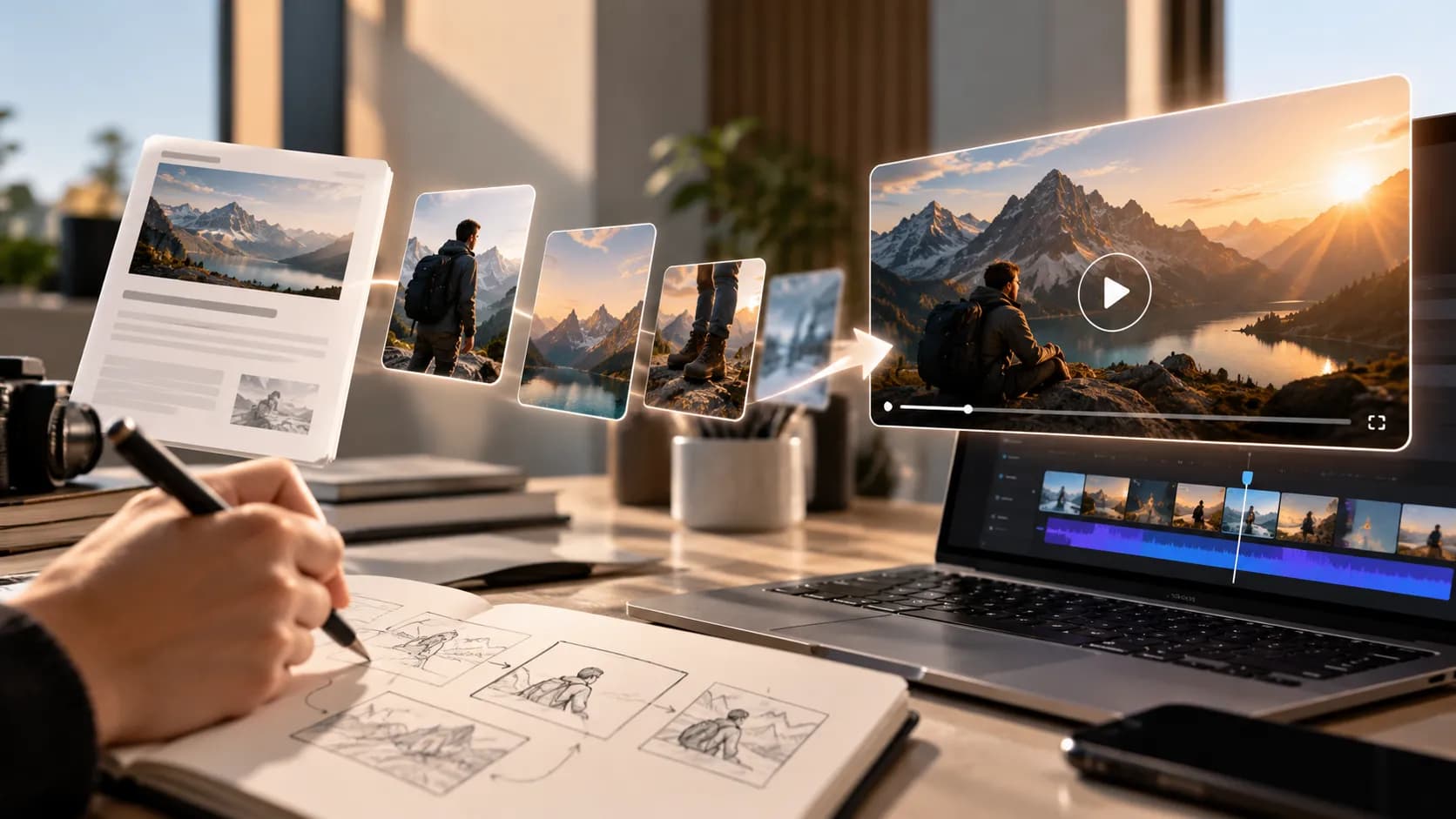
As a general rule, one clear action per clip tends to hold together better than several actions crammed into a single generation. If you need a sequence of events, it's usually more reliable to generate separate clips and edit them together.
Example Prompt Patterns for Different Use Cases
Different goals call for different emphasis within the same basic structure.
For a product showcase, prioritize the subject and lighting so the item stays the visual focus.
A pair of white leather sneakers on a rotating pedestal, slow 360-degree camera orbit, clean studio lighting with soft shadows, minimal and steady pacing.
For a talking-head style clip, keep the action minimal and focus on framing and setting, since the goal is usually a natural, steady presence rather than dramatic motion.
A person sitting at a wooden desk speaking naturally toward the camera, static medium shot at eye level, soft diffused indoor lighting, relaxed and even pacing.
For an abstract or atmospheric piece, lean into mood and camera movement rather than a defined subject, since the goal is often a feeling rather than a specific narrative.
Swirling colored smoke drifting through dark space, slow camera drift forward, moody low-key lighting with hints of blue and violet, gradual and continuous pacing.
In each case, the underlying structure stays the same. What changes is which elements you emphasize based on what the final video needs to communicate.
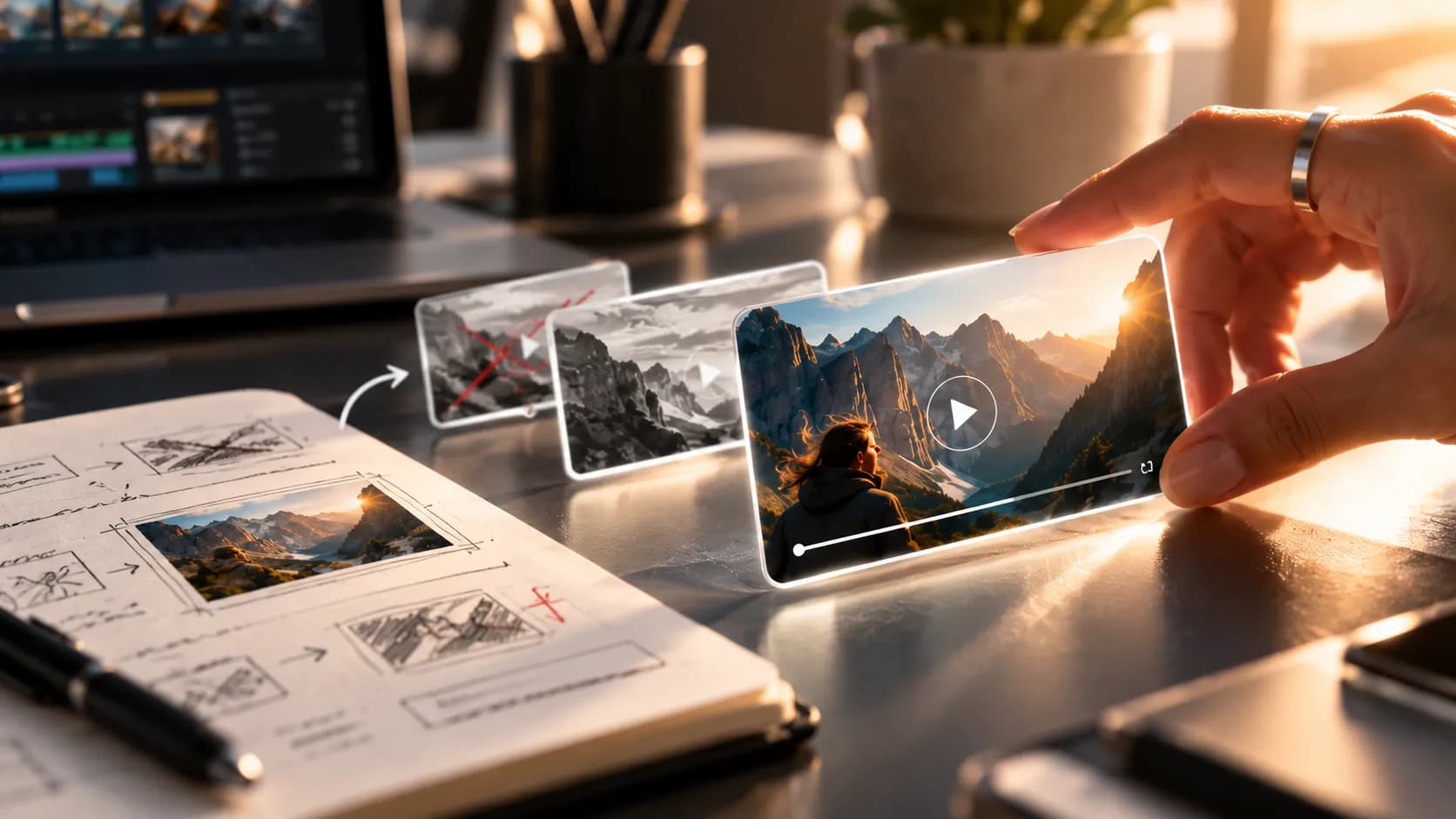
Reviewing Generated Video Against Your Original Intent
Before using a generated clip, it helps to check it against the prompt you actually wrote, not just whether it looks good in isolation.
- Re-read your prompt and note the core elements: subject, action, camera movement, setting, mood, and pacing
- Watch the clip and compare it against each element individually rather than judging the whole thing at once
- Flag anything that drifted, such as a camera movement that didn't happen or an action that got cut short
- Decide whether the gap is worth a revised prompt or whether the result is close enough to use as is
- If you regenerate, adjust only the part of the prompt tied to the issue rather than rewriting the whole thing
This kind of quick review step saves time over generating clips randomly and hoping for the best. Since Seedance 2.5 lives inside Xelta's wider creative ecosystem, a clip that needs a touch-up can also move into other tools on the platform for further editing rather than starting over from scratch.