





AI Video Generator for Businesses: 10 Practical Use Cases
Most businesses do not run out of video ideas. They run out of time to make them.
A product launch needs a short promo. Customers keep asking the same setup question. The sales team wants something clearer than another presentation. Each request makes sense, but finding time to script, film and edit everything is difficult.
An AI video generator for businesses can help with parts of that workload. Tools such as Xelta let teams create visuals from text prompts and images. The key is knowing where generated footage helps and where real recordings still matter.
Here are ten practical places to start.
Quick Answer
Businesses can use AI video generators to create product showcases, advertising variations, social clips, service explainers, sales follow-ups, onboarding content, training scenarios, recruitment videos, event promotions and campaign previews. Start with one clear message and approved source material. Review the finished video for accuracy, then measure whether it helps viewers take the intended next step.
First, Decide What You Actually Need to Show
"Make us a video" is a difficult brief for a person or an AI tool.
A better starting point is a specific question: What should someone understand after watching?
If you sell furniture, you might want to show how a chair looks in a small apartment. If you sell software, you might need to demonstrate how to export a report. Those are different jobs.
Generated visuals can help illustrate the apartment scene. The software tutorial needs a recording of the real interface.
Xelta's AI Video Generator supports text-to-video and image-to-video creation. Use those capabilities where new visuals add value, then combine them with accurate product footage, captions and editing as needed.
- Give Product Photos Some Movement
A good product photograph does not always need replacing. Sometimes, a little movement is enough to create another useful asset.
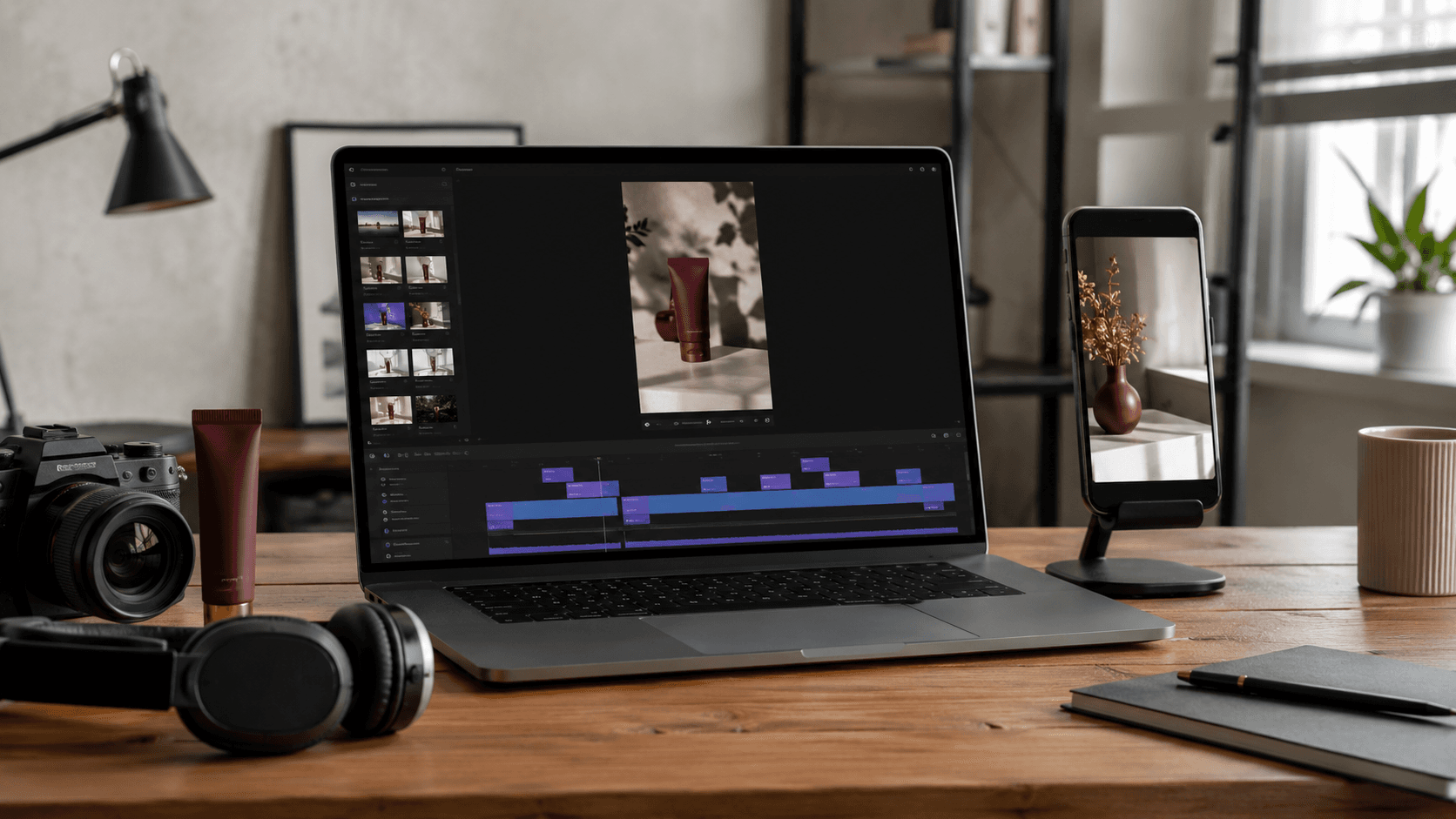
An online store could turn an approved bottle image into a short showcase with a slow camera move and a simple background. That clip could sit alongside existing product photos.
Check the result carefully. If the label changes or the bottle becomes a different shape, the video is not ready to publish.
2. Try Different Ad Openings
You may have a useful offer but the wrong opening message.
A furniture retailer could test one video focused on small-space living and another focused on comfort. Keep the offer and audience consistent so the comparison tells you something useful.
AI-generated scenes can help you explore those angles. Judge them by qualified leads or purchases, not just which version gets more views.
3. Answer Customer Questions on Social Media
Your inbox is often a better source of video ideas than a blank content calendar.
A cleaning business might explain what customers should move before a visit. A retailer could answer a common product-care question.
Use a short script, relevant visuals and readable captions. Keep each clip focused on one answer.
For help adapting the format, see Xelta's guide to creating Reels, Shorts and ads.
4. Explain a Service That Is Hard to Photograph
Some businesses sell work that happens behind the scenes.
A consultancy, for example, may need to explain how it helps teams coordinate projects. Supporting visuals can make that explanation easier to follow without turning the video into a slide full of text.
Keep the language specific. Show what the service involves, and do not present generated offices or fictional clients as real company footage.
5. Make Sales Follow-Ups More Useful
After a sales call, another long PDF may not be what the prospect needs.
A short video can recap one relevant problem and show how your product addresses it. Use real product footage for the demonstration, with generated visuals only where they help explain the context.
Build the message around what the prospect actually said. Measure whether the video leads to a useful reply or next meeting.
Have a brief in mind? Try creating one supporting scene with Xelta before committing to a complete campaign.
6. Help New Customers Complete Their First Task
Customer onboarding works best when people can quickly do something useful.
Instead of one long welcome video, explain a single task: setting up an account, finding an invoice or booking a service.
Use real screen recordings for instructions. AI-generated visuals can support an opening or transition, but they should not invent buttons or steps.
Watch whether customers complete the task and whether related support questions decrease.
7. Bring Training Scenarios to Life
A written training guide can explain a process. A short scenario can show what that process looks like in practice.
For customer service training, a team could illustrate a hypothetical conversation and ask employees how they would respond.
Have a subject matter expert review the lesson before it is shared. Safety-critical procedures need validated demonstrations, not plausible-looking generated actions.
8. Give Applicants a Clearer Picture of a Role
Recruitment videos do not have to be elaborate company films.
A useful role preview can explain daily responsibilities, working arrangements and the application process. Combine approved information with real workplace footage and clearly illustrative visuals.
Be honest about what viewers are seeing. Generated employees should not appear to give genuine testimonials, and an imaginary office should not represent the actual workplace.
9. Create Event Promotions That Are Easy to Update
Webinars and business events usually need several promotional assets, often on a tight schedule.
Generate a thematic opening, then add approved speaker images, the event topic and registration details during editing.
Keep dates and other factual text editable. If a speaker changes, you should not need to rebuild the whole video.
Track registrations and attendance to see whether the promotion brought the right audience.
10. Preview an Idea Before Paying to Film It
Sometimes, the most useful AI video never gets published.
A rough concept video can help a team compare settings, pacing or camera angles before organizing a shoot. It gives people something concrete to discuss.
Treat it as a visual draft, not a promise of the final production. Its value is helping the team agree on a direction before larger costs are committed.
Check the Workload, Not Just the Generation Speed
A tool that produces footage quickly may still leave your team with hours of corrections. Before scaling up, check the full process.
| What to Check | The Question to Ask |
|---|---|
| Accuracy | Does the video show the product and message correctly? |
| Revisions | Can we fix a scene without starting everything again? |
| Publishing | Does the output fit the intended channel? |
| Permissions | Are these assets and uploads approved for this use? |
| Total effort | How much time did generation, editing and approval take? |
Include unsuccessful attempts when calculating costs. What matters is the cost of an approved video, not the price of the first draft.
Start With One Video You Already Need
Choose a small, recurring task with a clear message and someone responsible for reviewing it. Create the video, check the details and compare the effort with your usual process.
If it works, repeat it. If fixing the output takes longer than recording it, change the approach.
Start with one real brief using Xelta's video creation tools. Let the quality of the finished work decide what you scale next.
Frequently Asked Questions
What is the best AI video generator for businesses?
It depends on what you need to make. Compare tools using the same real brief, and look at accuracy, editing effort, export options and total cost rather than choosing from showcase videos alone.
Can a small business use AI video without an editor?
Simple projects can be manageable without specialist editing experience. Someone still needs to review the message, correct visual errors and check the final format before publishing.
Can AI generate software tutorials?
AI can support the production process, but exact instructions should use recordings of the real software. Generated interfaces can look convincing while showing buttons or workflows that do not exist.
Will AI videos help my business sell more?
They might, but using AI does not guarantee better results. The offer, audience and message still matter, so test the video against a clear business objective.
Can I use AI-generated videos in paid advertising?
Check the relevant platform, model and subscription terms first. You should also confirm permission to use any images, music, voices or likenesses included in the video.
Can AI replace a professional video production team?
It can handle parts of some projects, especially visual drafts and supporting scenes. Real demonstrations, interviews and productions requiring precise control may still need filming and experienced editors.